Key Takeaways
Rain helps, but it is only one part of good solar panel maintenance. It rinses away light dust, but bird droppings, sap, pollen films and pooled dirt on flat panels usually remain.
- Most homes need only occasional cleaning, prompted by visible dirt or lower output.
- Safety on wet roofs matters more than recovering a few percent of output.
- In rainy climates, well-tilted panels typically keep dirt losses below 5–10%.
Does Rain Really Clean Solar Panels? (Short Answer First)
Rain acts as a basic rinse, not a full clean. Field studies have found losses of only around 5–11% after years without cleaning, so nature does a decent but imperfect job, depending on tilt, climate and nearby trees, farms or roads. With tilted panels in a wet climate, rain handles most of the work; otherwise, plan some cleaning to keep clean solar panels performing.
How Dirt Actually Reduces Solar Energy Production
Any layer between sunlight and the cells blocks or scatters light, whether road film, pollen, droppings, leaves or coastal salt. Dirty panels rarely fail outright, but one shaded corner can cause disproportionate losses because of how cells are wired. A gradual 3–8% drop over a dry spell usually points to dirt rather than faulty equipment.
When Rain Is Enough To Clean Solar Panels
In mild, rainy regions like Ireland, nature does much of the work when conditions suit:
- panels tilted at least 10–15°
- smooth glass and moderate dust levels
- no major bird nesting or overhanging trees
Showers restore most lost energy output after a dry spell, and many systems stay within 95% of clean-surface performance most of the year.
When Rain Is Not Enough: Flat Panels, Pollen & Bird Droppings
Some situations always need manual attention. On flat roofs of 0–5°, water pools and leaves mineral rings. Droppings, sap and pollen bond to glass beneath aerials, power lines or perches, near farms or on coastal homes, cutting output on affected panels by 10–30%.
How To Tell If Your Solar Panels Need More Than Rain
Use visual checks and monitoring together. After a dry spell, scan the array from the ground for hazy films or droppings. A drop of over 5–10% against the same month last year, with no new shading, suggests dirt worth adding to your solar panel maintenance routine. Our guide on spotting the signs your panels need cleaning covers this in detail.
DIY Solar Panel Cleaning vs Professional Cleaning
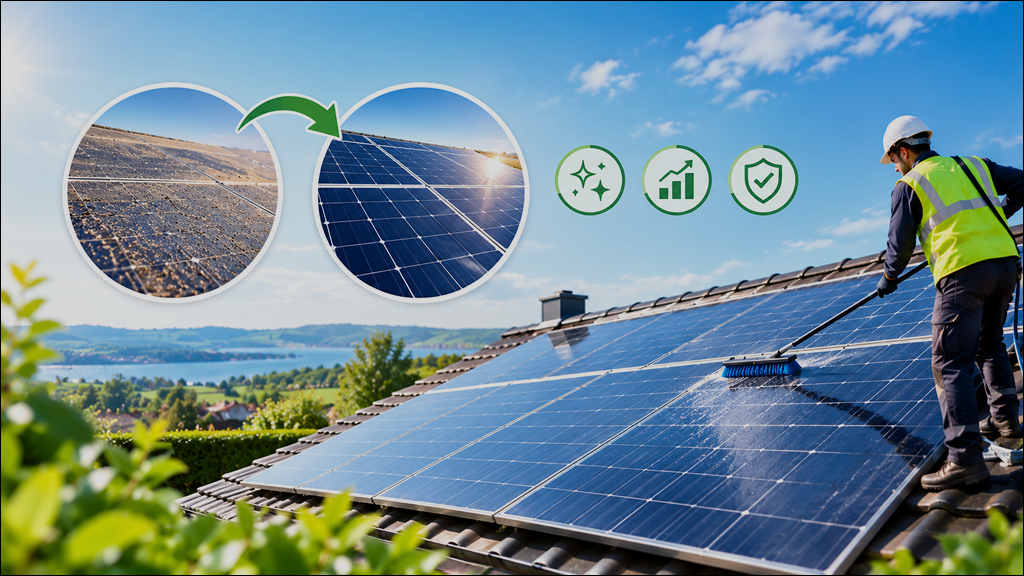
Safety should decide. DIY suits ground-mounted arrays or single-storey homes on dry, calm days, after switching the system off. Call professional cleaning services for steep roofs, multi-storey homes or heavy soiling, choosing insured providers who use deionised water and never pressure washers.
Safe Methods: How To Clean Solar Panels Without Damage
- Equipment:
a garden hose, soft brush or sponge on a pole, lukewarm water and a little mild detergent.
- Timing:
clean early or late in the day, when panels are cool.
- Process:
rinse, gently agitate stubborn spots, then rinse thoroughly.
- Avoid:
pressure washers, abrasive pads, solvents and polishes, which can void your warranty.
How Often Should You Clean Solar Panels If It Rains a Lot?
With tilted arrays in a rainy climate, an annual check in late spring is often enough. Flat panels and arrays near trees or roosts need checks every three to six months. If output stays stable, regular cleaning may simply mean periodic checks plus targeted cleaning after unusual events.
Cost–Benefit: Does Extra Cleaning Save Enough Energy?
In wet climates, occasional losses of 2–8% can cost less than frequent visits. Twice-yearly professional cleaning at a few hundred euro may recover only a modest amount of electricity. Large commercial arrays are the exception. Weigh system size and electricity prices, and see What Are the Main Solar Panel Maintenance Requirements? for wider upkeep.
FAQ
Does rainwater cause spots or damage on solar panels?
No damage, but mineral spots can form. A gentle rinse with low-mineral water usually restores clarity.
Should I clean my solar panels right after every storm?
Rarely, as storms usually help. Check from the ground for leaves or mud.
Can I rely completely on rain to clean off bird droppings?
No. Baked-on droppings persist, so clean targeted spots and consider professionally fitted bird guards.
Does cleaning solar panels myself affect my warranty?
Cleaning is usually allowed, but damage from improper methods is not covered. Follow your manufacturer’s manual.
What’s better: investing in more panels or paying for frequent cleaning?
In rainy climates, slightly more capacity often delivers more than frequent cleaning. Discuss sizing and cleaning needs with your installer.