The honest answer is: it depends on your hardware. A standard household that manually shifts a few appliances to cheap windows will save something, but not a lot. A household with solar, a battery, and a smart EV charger can save significantly – because all three assets can be scheduled automatically to exploit cheap overnight windows and avoid expensive peak periods.
Here is a worked example for a typical EnergyServ customer: 4kWp solar, 5kWh battery, 60kWh EV, on a dynamic tariff.
| Setup | Est. annual saving vs standard tariff | How |
|---|---|---|
| Solar only (4kWp) | €€200 – €400 | Daytime self-consumption reduces grid imports. Cannot arbitrage overnight cheap windows without a battery. |
| Solar + battery (4kWp + 5kWh) | €600 – €900 | Battery charges from grid at 2c-8c per kWh overnight. Discharges at 5pm-7pm peak (38c-55c per kWh), avoiding expensive imports. |
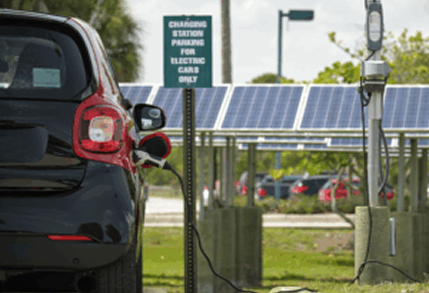
| Solar + battery + EV (4kWp + 5kWh + 60kWh EV) | €1,200 – €1,800 | All of the above, plus EV charges at the same cheap overnight window. Charging at ~4c instead of ~38c per kWh saves €700-€900 a year on 12,000km of driving alone. |
These figures are based on systems EnergyServ installs regularly across Ireland. A typical residential setup is a 4kWp solar array, a 5kWh hybrid battery, and a smart EV charger – all installed in a single visit with your system configured for automated scheduling from day one.
The key mechanism is battery arbitrage: charging your battery from the grid at 2c-8c per kWh during cheap overnight windows, and avoiding grid imports during the 5pm-7pm peak when prices typically reach 38c-55c per kWh. Your solar generation handles daytime imports. Your EV charges during the same cheap window as the battery. Each asset works independently but the savings stack. See our solar battery storage page for details on compatible systems.
| Your situation | Verdict | Why | |
|---|---|---|---|
| Solar + battery + smart EV charger | Strong yes |
|
|
| Battery only, no solar | Likely yes |
|
|
| Solar only, no battery | Moderate yes | You avoid imports during the day but cannot arbitrage cheap overnight windows. Modest saving. | |
| EV + smart charger, no solar or battery | Yes if you drive regularly | Charging at 4c instead of 38c per kWh saves €700 – €900 a year on 12,000km of driving.< | |
| Standard household, no solar/EV/battery | Caution | Savings depend on how flexibly you can shift washing, dishwasher etc. Expect €100 – €300 a year at best. | |
| High fixed daytime usage (e.g. shift worker sleeping days) | Probably not | You will regularly pay peak rates without the ability to shift load. Bills may increase. | |
| CTF score below 4 (poor smart meter signal) | Not yet eligible | You need a CTF score of 4 to access dynamic tariffs. Ask ESB Networks to investigate your signal. |
Before switching, check that your setup meets these requirements. EnergyServ will confirm all of this during a survey.
You need a smart meter with a Communications Technically Feasible (CTF) score of 4 to access dynamic tariffs. Check your score via the ESB Networks app or ask your supplier. ESB Networks installs smart meters for free – if you do not have one, request an installation.
Your battery must support ‘force charge’ or ‘grid charging’ mode – this allows it to charge from the grid during cheap overnight windows, not just from your solar panels. Most modern hybrid inverters support this, including GivEnergy, Sigenergy, SolarEdge, Huawei, Sungrow, and Solis. Confirm with your installer that this mode is enabled. If it is not switched on, you will not benefit from overnight arbitrage.
You need a hybrid inverter – not a standard string inverter with an AC-coupled battery – to charge your battery from the grid as well as from solar. If you have an older solar installation with a string inverter, upgrading to a hybrid may be required. See our battery storage page for compatible systems.
EnergyServ installs hybrid inverters from GivEnergy, Sigenergy, SolarEdge, and Huawei. If you have an existing string inverter installation, we will assess during a free survey whether a hybrid upgrade is viable and what it would cost.
A basic ‘dumb’ charger will draw electricity whenever it is plugged in, with no ability to schedule charging to cheap windows. A smart charger with time-of-use scheduling fixes this.
EnergyServ installs Zappi, Ohme, Wallbox Pulsar, and Easee chargers – all of which support dynamic tariff scheduling and can be configured to charge automatically during the cheapest half-hour windows. We handle all wiring, commissioning, and app setup as part of the installation. See our EV charger page for options.
You need access to next-day half-hourly prices to schedule your battery and EV charging. Your supplier publishes these through their app, typically by late afternoon the day before. Some third-party tools are also emerging to automate battery scheduling entirely – ask your installer what is compatible with your system.
Most installer visits focus on getting hardware installed and working. EnergyServ goes a step further: every installation is commissioned specifically for dynamic tariff operation, so your system is earning from day one rather than sitting in its default settings.
Here is what a typical EnergyServ dynamic tariff setup involves:
EnergyServ covers residential and farm installations across Ireland. To discuss your property, request a free survey .
Dynamic tariffs are not the right choice for everyone. Before switching, be aware of the following.