For many Irish business owners, commercial solar can still feel like a major construction project filled with paperwork, disruption, and uncertainty. In reality, a professional commercial solar installation is a structured, highly organised process designed to minimise downtime while delivering long-term savings from the very first day.
A typical commercial solar project involves:
- Analysing your business energy usage
- Designing a tailored solar PV system
- Completing grid connection and compliance paperwork
- Installing panels, inverters, and monitoring systems
- Testing and commissioning the system for safe operation
For most Irish businesses, the physical installation itself typically takes anywhere from a few days to a few weeks, depending on the project’s size and complexity.
At ENERGYSERV, we work with businesses across Ireland — including agricultural, commercial, industrial, retail, manufacturing, and hospitality sectors — to deliver tailored solar solutions designed for long-term performance and operational savings.
Our team has completed thousands of installations nationwide, ranging from agricultural rooftops and retail premises through to large-scale industrial and MW-capacity commercial projects.
Whether you operate a warehouse, retail unit, dairy farm, hotel, office, grain storage facility, poultry unit, or manufacturing site, understanding the installation process helps remove much of the uncertainty around going solar.
Why More Irish Businesses Are Investing in Solar
Commercial electricity costs in Ireland have increased dramatically in recent years, placing pressure on operating margins across almost every industry. At the same time, businesses are under growing pressure to improve sustainability performance and reduce carbon emissions.
For many companies, solar is no longer viewed simply as an environmental upgrade — it is becoming a core financial and operational decision.
Commercial solar can help businesses:
- Reduce exposure to rising electricity costs
- Improve long-term energy forecasting
- Lower carbon emissions
- Increase operational resilience
- Reduce reliance on imported grid electricity
For agricultural businesses and energy-intensive industries in particular, solar can provide substantial long-term savings where daytime demand aligns with solar generation.
As a family-run Irish business with nationwide commercial installation experience, ENERGYSERV works closely with clients to deliver systems tailored around real operational requirements rather than generic “off-the-shelf” solutions.
Step 1: Initial Consultation & Energy Assessment
Every successful solar installation begins with understanding how your business uses electricity.
At ENERGYSERV, we start with a detailed consultation to assess your current energy consumption, operating hours, infrastructure, and long-term energy goals.
Reviewing Your Energy Usage
We analyse:
- Electricity bills
- Half-hourly interval data
- Peak usage periods
- Seasonal energy trends
- Daytime vs night time consumption
- Future operational growth requirements
This allows us to design a system that maximises self-consumption — meaning your business uses as much generated electricity as possible instead of importing expensive grid power.
For example:
- A manufacturing facility operating during daylight hours may benefit from a large rooftop system
- A dairy farm with heavy morning and evening usage may benefit from integrated battery storage
- A retail premises with steady daytime demand can significantly reduce peak electricity costs
- A refrigeration-heavy agricultural facility may benefit from load-shifting strategies and battery integration
Site Suitability Assessment
We then assess whether your building and infrastructure are suitable for solar installation.
This includes reviewing:
- Roof condition and age
- Roof type (flat, pitched, metal deck, slate, etc.)
- Available roof space
- Nearby shading from trees or structures
- Structural loading capacity
- Existing electrical infrastructure
- Transformer and grid connection capacity
Older commercial and agricultural buildings may also require structural engineering assessments to verify roof loading capacity before installation proceeds.
Where asbestos-containing roofing materials are present, strict assessment and safety protocols are followed in accordance with Irish regulations before any works commence.
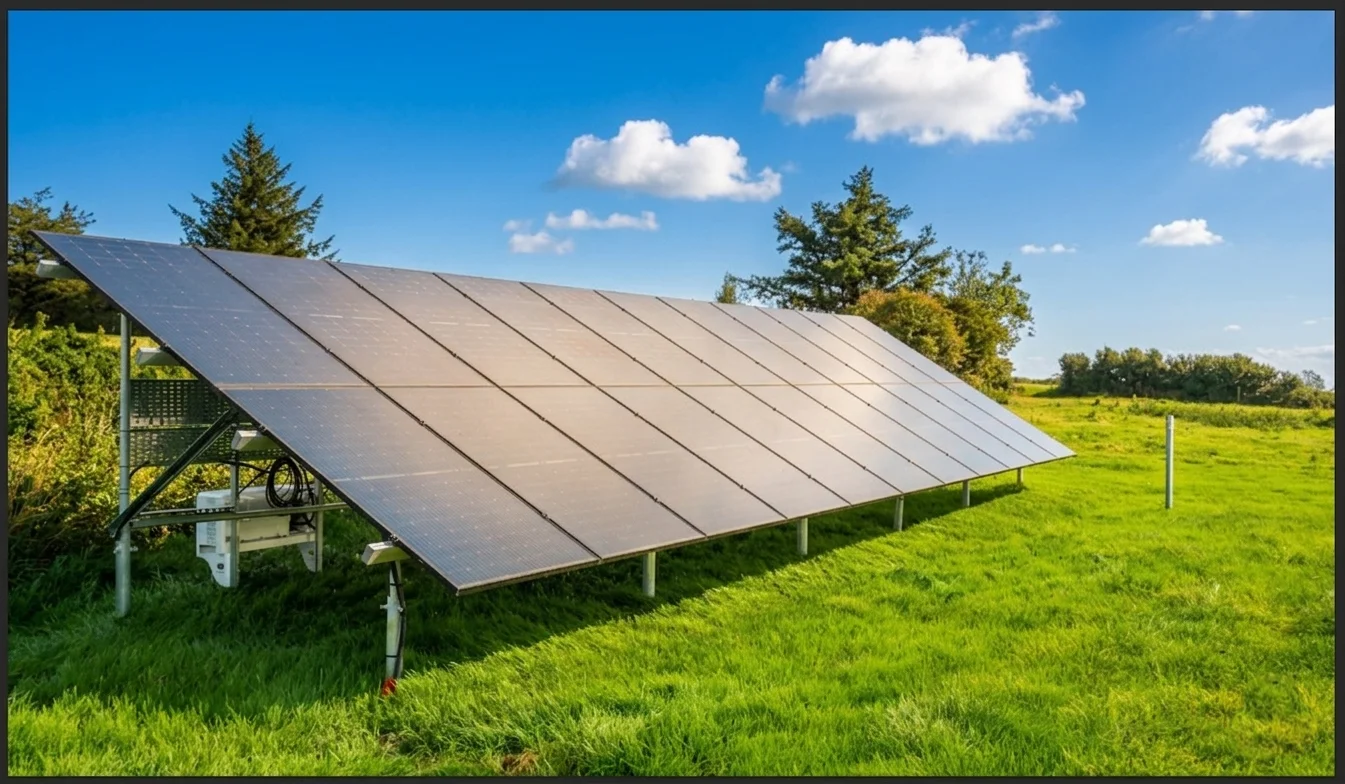
If rooftop installation is unsuitable, ground-mounted solar systems may also be considered, depending on available land space.
Step 2: Designing Your Commercial Solar System
No two businesses use electricity the same way, which is why commercial solar systems should never be “one-size-fits-all.”
After gathering site and energy data, we create a customised solar PV design tailored specifically to your operational requirements.
What the Proposal Typically Includes
Your commercial solar proposal will usually outline:
- Recommended system size (kWp)
- Estimated annual electricity generation
- Projected electricity savings
- Estimated carbon reduction
- Proposed panel layout
- Inverter specifications
- Battery storage recommendations
- Estimated installation timeline
- Estimated payback period
We also explain how much electricity your business is likely to consume directly versus export back to the grid.
For larger commercial and industrial sites, system design may also consider:
- Export limitation requirements
- Transformer capacity constraints
- Future expansion capability
- Load balancing considerations
- Battery storage integration
- Demand management opportunities
Understanding ROI & Payback
Many Irish commercial solar systems achieve payback within approximately 4–6 years, where strong daytime consumption aligns with solar production.
However, project timelines can vary depending on:
- Electricity usage patterns
- System size
- Energy prices
- Grant support
- Export rates
- Financing arrangements
- Grid limitations
- Battery integration requirements
Given that modern solar panels often carry 25-year performance warranties, many businesses benefit from decades of reduced electricity costs after the system has paid for itself.
Battery Storage Considerations
Commercial battery storage is becoming increasingly important for Irish businesses looking to improve energy efficiency and resilience.
Battery systems can support:
- Peak shaving
- Load shifting
- Demand management
- Maximising self-consumption
- Backup power capability
- Energy resilience during outages
For some businesses, battery storage helps reduce reliance on expensive peak-rate electricity imports while improving operational flexibility.
Many commercial systems are also designed so battery storage can be integrated later as energy requirements evolve.
Step 3: Grants, Planning Permission & Grid Applications
One of the biggest concerns businesses often have is whether the process involves complicated paperwork or planning delays. The good news is that many commercial rooftop solar systems in Ireland are now exempt from planning permission under updated regulations.
Planning Permission Considerations
Planning exemption often applies where:
- Panels are installed on rooftops
- Height limits are respected
- The building is not a protected structure
However, additional planning considerations may apply for:
- Protected buildings
- Certain industrial facilities
- Ground-mounted solar arrays
- Sites near airports
- Very large installations
Our team identifies any planning requirements early in the process to avoid unnecessary delays later.
ESB Networks Grid Connection
Every commercial solar installation must comply with ESB Networks’ requirements.
Depending on system size, this may involve:
- NC6 applications (smaller systems)
- NC7 applications (larger commercial systems)
These applications ensure the system is safely connected to the national grid and determine how much electricity can be exported.
For larger commercial systems, transformer capacity, export limitations, and site-specific grid constraints must also be carefully assessed to ensure long-term system stability and ESB compliance.
Some projects may require:
- Export limitation controls
- Additional protection settings
- Transformer upgrades
- Import/export balancing analysis
At ENERGYSERV, we manage the grid application process on your behalf to minimise delays and ensure full compliance.
Step 4: Preparing for Installation
Before installation begins, several technical, operational, and safety checks are completed to ensure the project runs smoothly.
Understanding RAMS: Safety & Method Statements
Safety is the highest priority during any commercial solar project. Before a single panel is lifted onto a roof, a comprehensive Risk Assessment and Method Statement (RAMS) is developed specifically for your site. This helps ensure the installation is carried out safely while protecting your staff, our installers, and your property.
The RAMS process includes:
- Detailed risk assessments
- Working-at-height safety planning
- Electrical hazard identification
- Safe access planning
- Site-specific operational procedures
- Emergency response planning
Structural & Electrical Checks
Pre-installation preparation may include:
- Structural engineering assessments
- Roof inspections
- Electrical board inspections
- Cable route planning
- Cable containment design
- Fire safety pathway planning
- Health & safety documentation
- Equipment delivery scheduling
- Crane lift coordination for large commercial projects
For older buildings, additional structural analysis may be required to confirm roof loading suitability before installation proceeds.
Some sites may also require electrical infrastructure upgrades, including:
- Distribution board modifications
- Cabling upgrades
- Transformer assessments
- Protection system upgrades
All works are completed under strict health and safety procedures, including RAMS documentation, fall protection systems, controlled access protocols, and live-site coordination procedures.
Minimising Disruption to Your Business
A professional commercial solar installation should cause very little disruption to daily operations.
We work closely with your management team to:
- Coordinate safe access routes
- Schedule work during quieter operational periods
- Minimise downtime
- Protect staff and visitors
- Manage live-site logistics safely throughout installation
In most cases, businesses continue operating normally while installation takes place overhead. This is particularly important for active manufacturing facilities, agricultural operations, logistics centres, hotels, and retail environments where operational continuity is critical.
Step 5: The Commercial Solar Installation Process
Once preparation is complete, the physical installation phase moves quickly.
Scaffolding & Site Setup
The first stage involves setting up:
- Scaffolding
- Safety barriers
- Fall protection systems
- Material delivery zones
- Crane access areas where required
Safety remains the highest priority throughout the entire project.
Mounting System Installation
Mounting rails and roof fixings are installed securely to support the solar panels.
This stage is critical because the mounting system must:
- Withstand Irish weather conditions
- Maintain roof waterproofing integrity
- Distribute weight safely across the structure
- Resist wind uplift
- Protect long-term roof performance
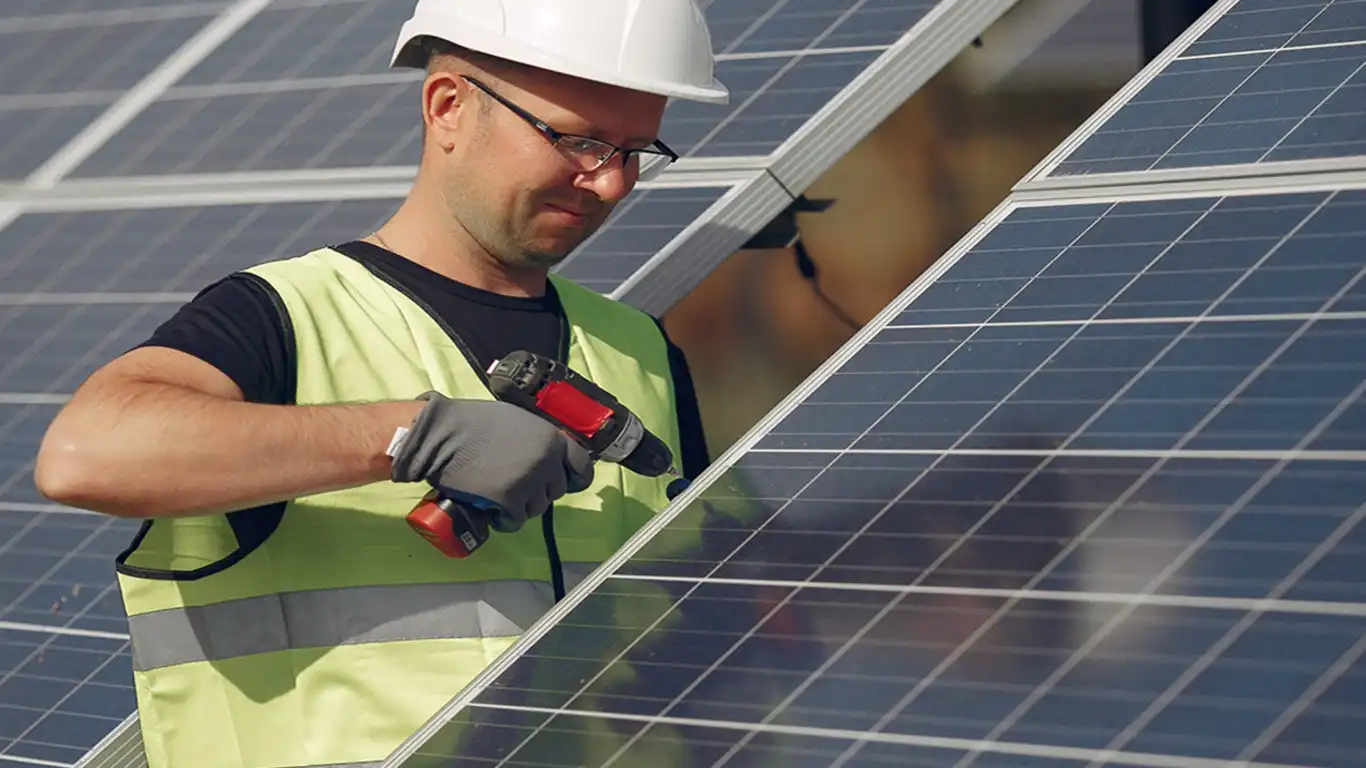
Installing the Solar Panels
The solar panels are then positioned and secured onto the mounting system. Panels are connected in “strings” which carry DC electricity toward the inverter system.
Careful cable management and containment is essential to ensure:
- Electrical safety
- Long-term reliability
- Clean system appearance
- Protection from weather exposure
- Safe maintenance access in future
Inverter & Electrical Installation
The inverter is effectively the “brain” of the solar system.
Its role is to convert DC electricity generated by the panels into usable AC electricity for your business.
This stage includes:
- Installing inverters
- Installing isolators and safety switches
- Connecting to the main distribution board
- Integrating monitoring systems
- Configuring export limitation controls where required
- Configuring battery storage systems (if included)
A brief planned power shutdown is sometimes required during final connection, although this is typically scheduled outside core operating hours.
Monitoring System Setup
Modern commercial solar systems include online monitoring platforms that allow businesses to track performance in real time.
Businesses can typically monitor:
- Live electricity generation
- Daily savings
- Carbon reductions
- System performance
- Fault alerts
- Historical performance data
Monitoring platforms can usually be accessed from:
- Smartphones
- Tablets
- Office PCs
At ENERGYSERV, our monitoring systems also support proactive fault detection, performance optimisation, and automated system alerts to help maximise long-term generation efficiency.
Step 6: Testing, Commissioning & Certification
Before the system becomes operational, extensive testing is carried out to ensure all safety and performance standards are met.
Final Testing Procedures
This includes:
- Electrical testing
- Voltage checks
- Insulation resistance testing
- Safety verification
- Inverter commissioning
- Export control testing
- Monitoring verification
- Performance validation
Handover Documentation
Once commissioned, you receive a full handover pack containing:
- System manuals
- Product warranties
- Electrical certificates
- Grid connection confirmation
- Maintenance recommendations
- Monitoring access details
At this stage, your system officially begins generating electricity for your business.
Step 7: What Happens After Installation?
One of the major benefits of commercial solar is how low-maintenance systems are once installed. However, ongoing monitoring and aftercare remain important for maintaining long-term performance.
Immediate Financial Benefits
Most businesses begin reducing electricity costs immediately after commissioning. Solar generation offsets expensive daytime electricity imports, helping lower operational overheads from the very first billing cycle. Many Irish businesses can reduce daytime electricity costs by up to 70–75% depending on:
- Operating hours
- Energy usage profile
- System size
- Battery integration
- Self-consumption rates
Ongoing Maintenance & Aftercare
Commercial solar systems contain very few moving parts, making them highly reliable over the long term.
Typical maintenance involves:
- Periodic visual inspections
- Occasional panel cleaning
- Monitoring inverter performance
- Checking electrical connections
- Reviewing generation performance
- Scheduled servicing support
Ireland’s rainfall naturally helps wash away much of the dust and debris that can affect panel performance elsewhere.
At ENERGYSERV, our aftercare support includes:
- Monitoring alerts
- Fault response support
- System optimisation
- Long-term servicing
- Maintenance assistance
- Future expansion planning
This long-term aftercare approach helps businesses protect system performance and maximise return on investment over the full lifespan of the installation.
System Lifespan
Modern commercial solar systems are designed for decades of operation.
Typical expectations include:
- Solar panel lifespan: 25–30+ years
- Inverter lifespan: 10–15 years
- Minimal annual performance degradation
This allows businesses to benefit from long-term electricity savings well beyond the original payback period.
How Long Does a Commercial Solar Installation Take?
The exact timeline depends on:
- System size
- Roof complexity
- Electrical infrastructure
- Grid approval requirements
- Weather conditions
- Site access requirements
Typical Timelines
Small Commercial Systems
Examples:
- Shops
- Offices
- Small farms
Typical installation time:
- 2–5 days
Medium to Large Commercial Systems
Examples:
- Warehouses
- Factories
- Hotels
- Agricultural facilities
- Manufacturing sites
Typical installation time:
- 1–3+ weeks depending on roof complexity, electrical infrastructure, crane access requirements, and project scale
What Usually Takes the Longest?
In many cases, the physical installation itself is the fastest part of the project.
The longer stages are often:
- Grid approval processing
- Final design approvals
- Equipment lead times
- Structural reviews
- Scheduling around weather conditions
Starting the process early helps avoid delays and secures your place in the installation schedule.
Commercial Solar FAQs
Will solar installation disrupt my business operations?
In most cases, disruption is minimal. Businesses usually remain fully operational throughout installation, with only a short planned electrical shutdown during final connection.
Can solar power my business during winter?
Yes. Although generation is lower in winter compared to summer, solar still significantly offsets daytime electricity usage year-round in Ireland.
What happens during a power outage?
Standard grid-connected solar systems automatically shut down during outages for safety reasons. Battery storage systems with backup capability can provide emergency power during blackouts.
Do commercial solar panels require regular cleaning?
Not usually. Ireland’s rainfall naturally keeps panels relatively clean, although occasional professional cleaning may be beneficial in dusty, agricultural, or coastal environments.
Can battery storage be added later?
Yes. Many commercial systems are designed with future battery integration capability as business energy requirements evolve.
How much grant support is available?
The SEAI Non-Domestic Solar PV Scheme currently offers grants ranging from €2,000 up to €162,500 depending on system size and eligibility.
Ready to Explore Commercial Solar for Your Business?
At ENERGYSERV, we help businesses across Ireland design and install high-performance commercial solar systems that reduce operational costs, improve sustainability, and deliver long-term energy security.
Our nationwide team has experience delivering projects across agricultural, industrial, retail, hospitality, manufacturing, and large-scale commercial sectors — including complex MW-scale installations requiring detailed engineering, grid coordination, and live-site management.
From initial consultation to final commissioning, we manage the complete process, including:
- System design
- Structural assessment coordination
- Grants and grid applications
- Installation and commissioning
- Monitoring setup
As a family-run Irish business, we combine large-scale commercial capability with hands-on customer support and long-term client relationships.
Whether you’re exploring rooftop solar for a warehouse, dairy farm, hotel, office, agricultural facility, or manufacturing plant, our team can guide you through the entire process from assessment and design through to installation, commissioning, and long-term support.
ENERGYSERV
Phone: (051) 433 020
Email: [email protected]
Website: EnergyServ.ie