As electric vehicles become increasingly popular in Ireland, more homeowners are looking into the convenience of installing a home EV charging station. While public chargers are expanding across the country, the ability to charge your car safely and efficiently at home offers unmatched ease and long-term savings. Understanding the costs involved—from equipment and installation to available grants—can help you make an informed decision.
The Typical Cost of Installing a Home EV Charger in Ireland
The price of a home EV charging station varies depending on the brand, model, installation complexity, and electrical setup of your property. On average, Irish homeowners can expect to pay between €800 and €1,500 for a standard 7.4 kW wall-mounted charger, including professional installation.
This cost generally covers:
- The charger unit itself
- Standard installation (mounting, cabling, testing, and setup)
- Electrical safety certification (e.g., Safe Electric compliance)
If your home requires a longer cable run, a new consumer unit, or groundworks, additional costs may apply. Properties with detached garages or older wiring often need extra upgrades to ensure safety and optimal performance.
SEAI EV Home Charger Grant
The Sustainable Energy Authority of Ireland (SEAI) offers a €300 grant to homeowners who install a new home EV charger. This grant applies to both new and second-hand electric vehicles and helps offset a portion of installation costs.
To qualify, you must:
- Own or lease an eligible EV.
- Have private off-street parking where the charger will be installed.
- Use a registered Safe Electric electrician.
Once approved, the grant is paid directly to your bank account after installation and verification of the charger setup.
Cost Comparison: Tethered vs Untethered Chargers
There are two main types of home EV chargers: tethered and untethered.
| Type | Description | Typical Price Range |
| Tethered | Built-in cable permanently attached to the unit | €900–€1,400 |
| Untethered | Socket-based design requiring a separate cable | €800–€1,200 |
Tethered chargers are more convenient for daily use—just plug and charge. Untethered units, however, offer more flexibility if you plan to change EVs or prefer a tidier appearance.
The Role of Smart Chargers
Most modern home EV charging stations now come with smart features, allowing you to:
- Monitor energy use from a mobile app
- Schedule charging during off-peak hours for lower electricity rates
- Integrate with solar PV systems for renewable charging
Smart chargers are slightly more expensive upfront (typically €1,100–€1,500 installed) but deliver long-term savings through improved energy efficiency.
If you already have solar panels, you can maximise free daytime energy to power your vehicle. EnergyServ’s home EV charging station options pair seamlessly with solar carports and battery storage systems, letting you create a fully sustainable home energy ecosystem.
Integrating EV Chargers with Solar Carports
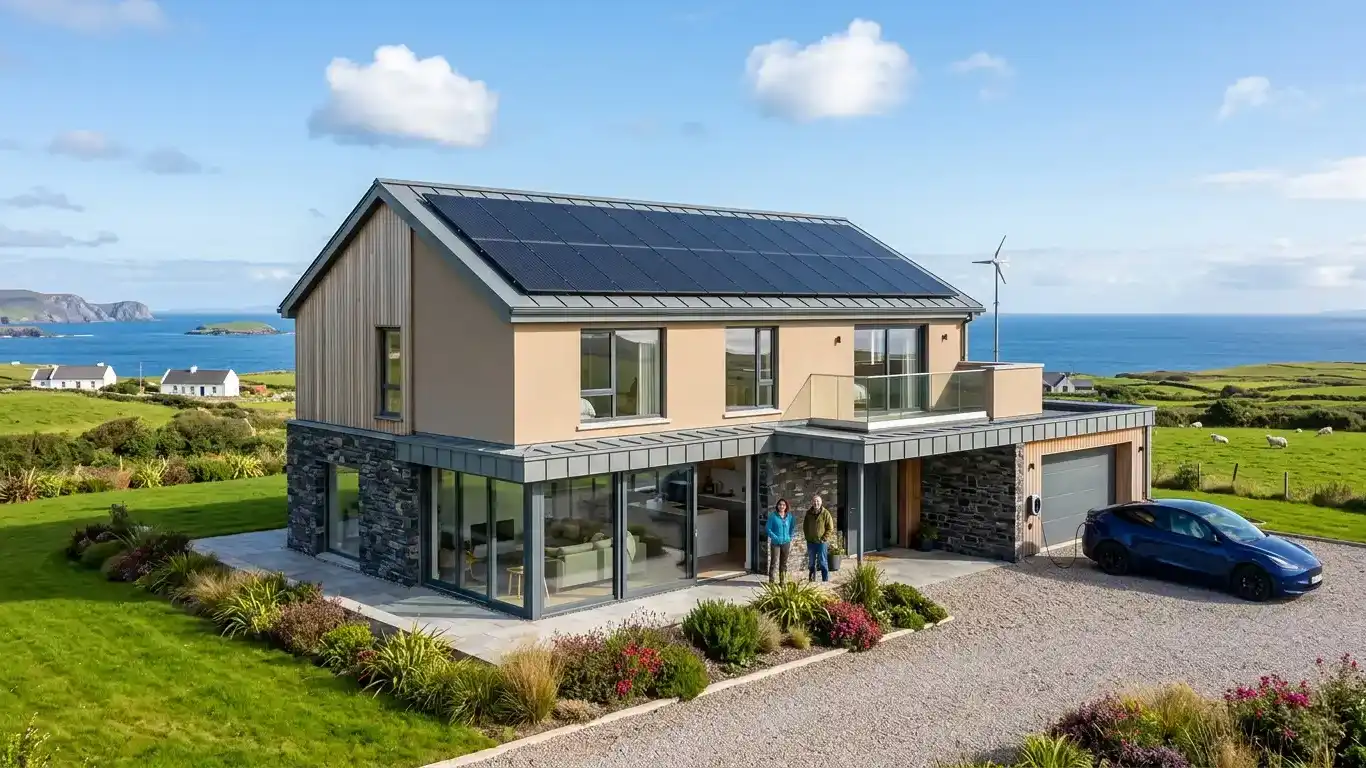
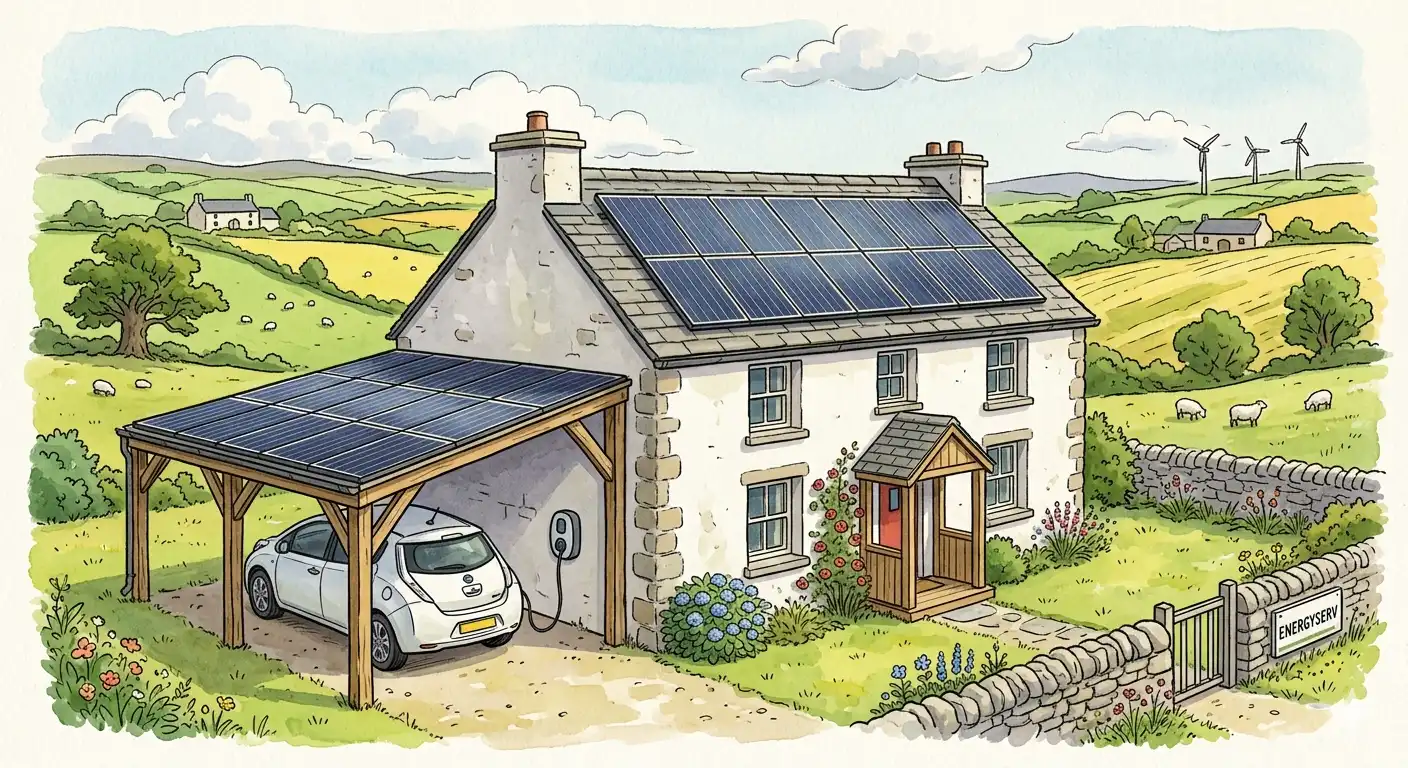
For Irish homeowners investing in green technology, combining solar panels with an EV charger can significantly cut energy costs. A solar carport not only provides covered parking but also generates clean electricity for your vehicle and home.
EnergyServ’s solar carports are engineered for Irish conditions—durable, weather-resistant, and customisable to your available space. By integrating a compatible charger, you can store excess solar energy during the day and power your car each night, reducing reliance on the grid.
Factors That Affect Total Installation Cost
Several factors influence the final cost of your home EV charger installation:
- Distance from fuse board – Longer cable runs mean more labour and materials.
- Electrical upgrades – Some homes require fuse board upgrades or new isolator switches.
- Mounting location – Wall-mounted units are cheaper than ground-mounted installations.
- Smart functionality – Wi-Fi and app-controlled units cost more but offer flexibility.
- Solar or battery integration – Adding renewable energy elements increases upfront costs but can lower running expenses.
When you request a quote from EnergyServ, the team provides a detailed breakdown based on your property layout, wiring condition, and energy goals.
How Long Does It Take to Install a Home EV Charger?
Most installations are completed within 2–4 hours. Complex cases, such as long-distance cabling or fuse board upgrades, might take up to a day. Installers typically inspect your home first to confirm that your electrical system is ready for the charger and will test everything before activation.
What Is the Cheapest Way to Charge an EV at Home?
The cheapest way to charge an electric vehicle in Ireland is by:
- Using a smart charger to schedule charging during night-rate electricity hours, usually between midnight and 9 a.m.
- Pairing your charger with solar panels, letting you use free renewable energy when available.
- Choosing an energy plan that offers lower rates for EV owners (several Irish electricity suppliers now provide EV-specific tariffs).
Even without solar, charging at night on off-peak rates can save up to 50% on electricity costs.
Can You Have a Fast EV Charger at Home?
Irish homeowners can install fast chargers (7.4 kW AC) that fully recharge most EVs in 6–8 hours. This type is ideal for overnight use. However, rapid chargers (22 kW AC or higher) typically require a three-phase electrical connection, which most Irish homes don’t have.
If you’re interested in faster charging, an EnergyServ technician can assess whether your property can support an upgrade or alternative setup, such as integrating battery storage for energy balancing.
Why Choose EnergyServ for EV Charger Installation?
EnergyServ has become a trusted name in Ireland’s renewable energy sector, offering end-to-end installation of EV chargers, solar panels, and battery systems. When you choose EnergyServ, you benefit from:
- Certified installers with full SEAI compliance
- Customised energy solutions tailored to your home
- Ongoing support for maintenance and future upgrades
- Integration options with solar PV and carport systems
Whether you’re installing your first EV charger or expanding your renewable setup, EnergyServ helps you create a more sustainable, cost-efficient home.
Ireland’s Move Toward Electric Mobility
Ireland’s Climate Action Plan aims for nearly one million EVs on Irish roads by 2030. Home chargers will play a crucial role in achieving this, ensuring that drivers can charge efficiently, affordably, and safely. With grant support and advancing technology, the investment in a home EV charger is more accessible than ever.
Sustainable charging starts at home.
By installing a home EV charging station with EnergyServ, Irish homeowners can cut fuel costs, reduce emissions, and future-proof their homes for the electric era.
Book your home energy assessment today and start saving.
The EnergyServ team will assist you.
Book Your Free Solar Consultation