Charging an electric car in Ireland can cost anywhere from a couple of euro to over €30 for the same battery, depending entirely on where and when you plug in. Here is exactly how to get the lowest possible cost out of your home charging setup.
Key Takeaways
- The cheapest way to charge an EV at home is to combine a dedicated home EV charger with a time-of-use or EV-specific electricity plan, and to add rooftop solar where possible.
- Off-peak EV tariffs in 2026 run from roughly 6c to 12c per kWh, against standard day rates of around 30c to 42c per kWh – charging overnight rather than during the day can cut costs by 60-80%.
- A full charge of a typical 60kWh EV battery costs from as little as €4–€7 on a cheap night-rate tariff, compared with €25–€30+ at a typical public rapid charger.
- The SEAI Home Charger Grant (up to €300) and good charging habits – charging only when needed and setting sensible charge limits – reduce running costs further over the life of the car.
- Solar panels, and a home battery where budget allows, can push the effective cost of a meaningful share of your annual charging close to zero.
How to Charge an EV at Home for the Lowest Cost (Quick Answer)
- The cheapest routine for most Irish households: install a 7kW home EV charging station, switch to a dedicated EV or night-rate electricity plan, and schedule most charging between roughly 23:00 and 08:00, or within a narrower 2am–4am boost window.
- Worked example: on a 2026 EV night tariff at around 9–12c/kWh, a 60kWh electric car costs roughly €5.50–€7.20 to charge fully at home, versus €30 or more at a typical public rapid charger billed at around 54c/kWh. For a full breakdown of upfront and running costs, see our guide to the cost of a home EV charging station.
- Adding rooftop solar, and a home battery if your budget allows, lets you shift some charging onto free daytime generation, pushing the effective cost of part of your annual mileage close to zero.
- The sections below cover choosing the right charger, picking the best electricity plan for your routine, and whether solar is worth it for your home.
Understanding Your Home EV Charging Options
There are three main ways to charge an electric car at home, and each comes with a different balance of cost, speed and convenience. Picking the right one for your driving pattern is the first step to keeping your running costs down.
- A standard 3-pin domestic socket (often called a “granny cable”), a dedicated wall-mounted charging point (typically rated at 7kW), and, on homes with a three-phase supply, faster 11–22kW units.
- For most electric vehicle drivers, a 7kW wall-mounted home EV charging station gives the best balance of cost, charging speed and safety for everyday use.
- Home charging is almost always cheaper per kWh than public charging stations and better suited to daily top-ups; public chargers remain useful mainly for longer journeys.
- Battery size affects both time and cost: a Nissan Leaf (around 40kWh) tops up far faster than a VW ID.3 (roughly 58–77kWh) or a Tesla Model 3 (roughly 60–75kWh), so larger batteries need longer off-peak windows or higher-power chargers.
Choosing the Right Home EV Charger on a Budget
The charger itself is a one-off cost, so it pays to choose carefully rather than over-spec for features you won’t use.
- A 7kW wall-mounted home EV charger is usually the cheapest sensible option for most Irish homes, balancing hardware cost with installation complexity.
- Smart scheduling lets the charger start automatically during your cheapest tariff window, rather than relying on you to remember each night.
- Load balancing monitors your home’s main fuse and reduces charging current when other appliances draw power, often avoiding a costly fuse or panel upgrade.
- Tethered chargers (with a fixed cable) are usually a little cheaper and simpler; untethered units cost slightly more but give you flexibility if you change car brands later.
- Typical 2026 Irish pricing: a 7kW smart wallbox costs roughly €800–€1,800 fully installed by a Safe Electric registered electrician, before grants. For a detailed cost breakdown, see our guide to the cost of a home EV charging station.
- The SEAI Home Charger Grant currently provides up to €300 towards an SEAI-approved smart charger, bringing many installations down to roughly €500–€1,200 out of pocket.
- A basic portable charging cable used on a standard socket is the cheapest way to get started, but it is slow and usually not the best long-term option for daily charging.
Wall-Mounted Charging Points: Best Value for Everyday Use
- A 7kW home EV charging station typically adds roughly 30–50km of range per hour, enough to fully recharge most electric cars overnight within a single off-peak window.
- Dedicated charging points are generally more efficient and safer than repeated use of a 3-pin socket, cutting wasted electricity and reducing the risk of needing an electrician call-out for an overloaded circuit.
- Almost all modern electric vehicles sold in Ireland use a Type 2 connector for home AC charging, and most smart wall-mounted units work with EV tariff apps and scheduling tools.
- Position the charger as close as possible to your usual parking spot to keep cable runs, and installation costs, down, whether that’s a driveway, a garage wall, or a covered structure such as a solar carport.
Portable “Granny” Cables: When They’re (and Aren’t) Cheapest
A portable cable looks like the cheapest option on day one, but for regular charging it usually isn’t.
- A standard domestic socket typically delivers only around 2.3kW, so a full charge of a larger EV battery from empty can take well over 24 hours – often longer than a single off-peak window.
- Repeated heavy use can put extra strain on older household wiring and increase resistive losses, and an electrician may eventually recommend an upgrade, eating into the initial savings.
- Granny cables work best as a backup for occasional top-ups, such as charging at a friend’s house or in a rural area without dedicated charging facilities.
- Even an entry-level wall-mounted charger usually pays for itself within a few years once it lets you consistently access a cheaper EV electricity plan instead of a standard socket.
Picking the Cheapest Electricity Plan for Home EV Charging
Your electricity plan usually has a bigger impact on running costs than the charger itself, since the gap between a standard day rate and a dedicated EV night rate is often four to six times.
- Flat-rate tariffs charge the same price for every kWh regardless of time of day, typically around 30c–42c/kWh in 2026 including VAT.
- Time-of-use and EV-specific tariffs split the day into bands, with cheaper night or “boost” rates and a more expensive peak band, usually 17:00–19:00 on weekdays.
- As of mid-2026, EV-friendly off-peak rates from Irish suppliers range from roughly 6c/kWh on narrow 3-hour boost windows to around 12–15c/kWh on broader 6–9 hour overnight windows, against standard rates of 30c/kWh or more.
- If you have a smart meter, compare EV-specific plans across suppliers, focusing on the off-peak price, the length of the off-peak window, and any standing charges – a slightly higher rate over a longer window can sometimes beat an ultra-cheap but very short one.
- Most EV chargers and modern electric cars let you schedule charging through an app, so set a start time (commonly 23:00 or 02:00) that lines up with your specific plan’s cheapest window.
EV-Specific and Night-Boost Plans
- An EV-specific tariff offers a lower kWh rate during a dedicated charging window: either a narrow overnight “boost” period (commonly 2am–4am or 2am–5am) or a broader off-peak band (often 23:00–08:00).
- Example: charging a 60kWh EV at around 9–12c/kWh on an EV night tariff costs roughly €5.50–€7.20, compared with around €18–€21 at a standard day rate of 30–35c/kWh.
- Some Irish suppliers also link discounts to periods of high renewable output, or offer free weekend electricity, giving EV drivers extra ways to time cheap charging sessions.
- Compare your actual routine against each tariff’s structure before switching: a narrow 3-hour super-cheap window suits a quick late-night top-up, while a longer, slightly pricier off-peak band suits charging from a low state of charge or running other appliances overnight.
Dynamic and Smart Tariffs Linked to Real-Time Prices
- Dynamic tariffs change the electricity price roughly every 30 minutes based on the wholesale market. From 1 June 2026, all major Irish suppliers are required to offer at least one dynamic plan.
- A smart EV charger, or many modern electric cars, can automatically start and stop charging during the cheapest hours without the driver having to do anything manually.
- Example: on a windy night with strong wind generation, dynamic rates can fall to just a few cents per kWh – occasionally close to zero – making a full charge of a 50–60kWh battery cost only a few euro.
- The trade-off is that dynamic tariffs can also spike considerably during high-demand evenings, so they work best for drivers with a smart charger and enough flexibility to avoid charging during peak hours.
Using Solar (and Batteries) to Cut Home EV Charging Costs
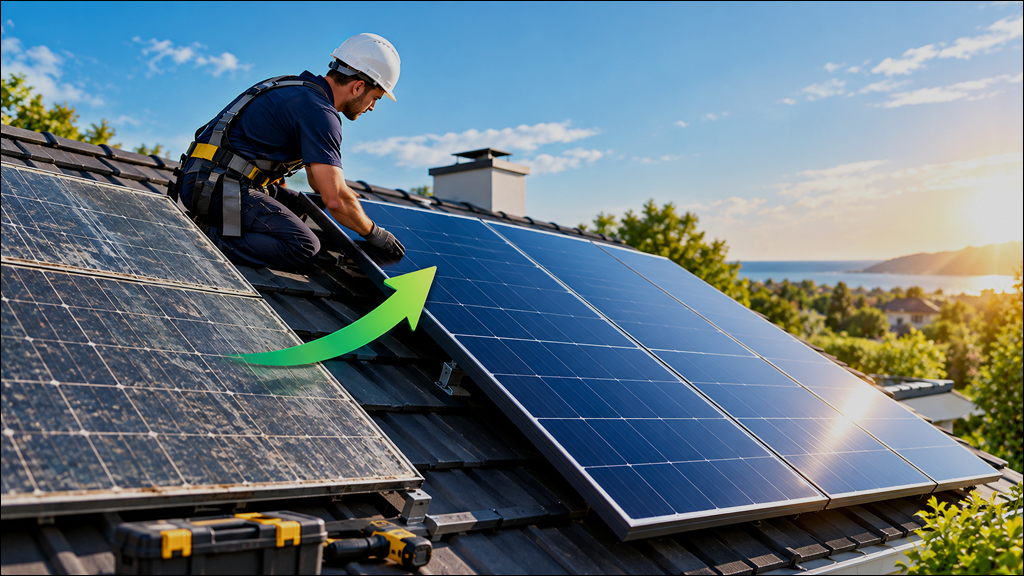
Rooftop solar panels, and an optional home battery, can meaningfully reduce the long-term cost of charging an electric car, particularly for households that can charge during daylight hours.
- A typical Irish residential solar PV system of around 4–5kWp generates roughly 4,000–4,500 kWh per year, based on SEAI’s published generation estimates for south-facing roofs.
- Example: a household driving 10,000–15,000km a year might use roughly 1,700–2,600 kWh on EV charging annually; a 4–5kWp system can realistically cover a meaningful share of that if some charging happens during daylight, such as weekends or working from home.
- Solar doesn’t make charging free from day one – a typical system costs roughly €7,000–€12,000 installed before the SEAI Solar PV Grant (up to €1,800 in 2026) and 0% VAT are applied – but over a 15–25 year panel lifespan, the effective cost per kWh falls well below grid electricity.
- A home battery lets you store cheap off-peak grid electricity or surplus solar generated during the day, then use it for EV charging in the evening or early morning rather than exporting it at a lower feed-in rate.
- Pairing a home EV charging station with a solar carport is one of the most space-efficient ways to combine generation and charging on the same structure, particularly useful where roof space on the house itself is limited.
When Solar Is Worth It for EV Charging
- Solar tends to make the most financial sense for detached or semi-detached homes with an unshaded, well-oriented roof, drivers covering reasonable annual mileage, and households planning to stay in the property for several years.
- It’s less likely to pay off quickly for apartments without roof access, short-term tenancies, or very low annual mileage, where the payback period may outlast the time spent in the property.
- Look at the combined savings on both household electricity use and EV charging, not the EV alone, when judging payback time – solar offsets your whole home’s consumption, not just the car.
- SEAI’s online solar calculators, or quotes from SEAI-registered installers, can model expected generation, your EV usage, and projected electricity prices to give a realistic payback estimate.
Home vs Public Charging: Where Is It Really Cheapest?
Home charging wins on cost almost every time – the gap with public rapid charging has only widened as public network pricing has risen.
- As of 2026, Irish public rapid (DC) chargers typically start from around 54c/kWh, plus optional monthly membership fees, while standard home electricity sits around 30–42c/kWh and EV off-peak tariffs sit around 6–15c/kWh.
- Example: a 300km trip using roughly 50–55kWh of energy might cost around €5–€8 charged mostly at home on an off-peak tariff, compared with roughly €27–€30 if charged entirely at a public rapid charger.
- Some workplace or destination chargers are free or subsidised, but a growing number of public charging points now carry variable pricing and idle fees that can make them considerably more expensive than home off-peak electricity.
- For most electric vehicle drivers with access to a driveway or assigned parking space, the cheapest overall strategy is to do almost all routine charging at home and reserve public charging for longer trips.
Is It Ever Cheaper to Rely on Public Charging?
- Some employers, retail parks or local councils occasionally offer free or heavily discounted charging, which can beat home electricity costs if it’s reliably available near where you live or work.
- Relying entirely on public charging usually means more time spent waiting, occasional queues, and exposure to price changes across networks, which is rarely practical for daily commuting.
- Many public networks now combine per-kWh rates with idle fees or membership charges, which can quickly cancel out any apparent savings compared with home charging.
- For most owners with a driveway or dedicated parking space, investing in a home charging point and a well-matched electricity plan remains the cheapest, most predictable long-term option.
Practical Tips to Keep Your Home EV Charging Costs Down
- Schedule charging for off-peak hours using either your car’s built-in timer or your charger’s smart scheduling app, rather than charging on demand at standard rates.
- Set a daily charge limit of around 70–90% for everyday driving, reserving 100% charges for longer trips; this protects long-term battery health and range.
- Keep tyres correctly inflated, avoid carrying unnecessary weight, and use eco-driving modes where available, since improved efficiency reduces the kWh needed per kilometre.
- Review your electricity plan at least once a year, particularly when your contract ends or new EV-specific tariffs launch, to confirm you’re still on the cheapest available option.
- Have your home charging point checked periodically by a qualified electrician to keep it safe and running efficiently for years of regular use.
FAQ
Can I still save money charging an EV at home if I don’t have a driveway?
- Savings are harder without off-street parking, but options exist, including shared chargers in apartment developments (supported by the SEAI Apartment Charger Grant), on-street charging schemes, and workplace charging facilities.
- Curbside charging points and resident parking permits are gradually expanding in some Irish towns and cities, reducing reliance on more expensive public rapid chargers.
- It’s worth checking with your local council or building management about plans for shared EV charging facilities in communal parking areas.
Is it cheaper to buy a faster home charger (e.g. 11–22kW)?
- Faster AC chargers don’t reduce the price you pay per kWh; they simply deliver the same energy more quickly, and often require a three-phase electricity supply that many Irish homes don’t have, adding to installation costs.
- For most homes and electric cars, a 7kW home charging station is fast enough to fully recharge the battery overnight within a typical off-peak window.
- Higher-power chargers are mainly useful for very high daily mileage drivers or households charging multiple EVs from a single charging point.
How often should I fully charge my electric car to 100% at home?
- Most manufacturers recommend charging to around 80–90% for daily use, reserving 100% charges for longer journeys, since this helps protect long-term battery health.
- Maintaining good battery health helps preserve range over the years, which in turn reduces how often you need to charge and your overall electricity use.
- Always check your specific EV’s manual for the manufacturer’s recommended charging limits and scheduling settings.
Do all electric cars work with the same home EV charger?
- Most modern electric cars sold in Ireland and across Europe use a Type 2 connector for AC home charging, which standard wall-mounted home chargers support.
- Older or imported models, particularly from outside Europe, may use a different connector, so it’s worth confirming compatibility before installing a charging point.
- If your household expects to run different EV brands over time, an untethered charger (or one supplied with an adapter) offers more flexibility than a fixed cable.
Will installing a home charger increase my home insurance or require permission?
- A professionally installed EV charger generally has little impact on home insurance, though it’s good practice to notify your insurer once it’s fitted.
- Some apartment blocks, housing associations or landlords require written permission, or work carried out by specific approved installers, before a new charging point can be fitted.
- Check local building regulations and, where relevant, your management company’s rules before installation to avoid unexpected costs or delays later.