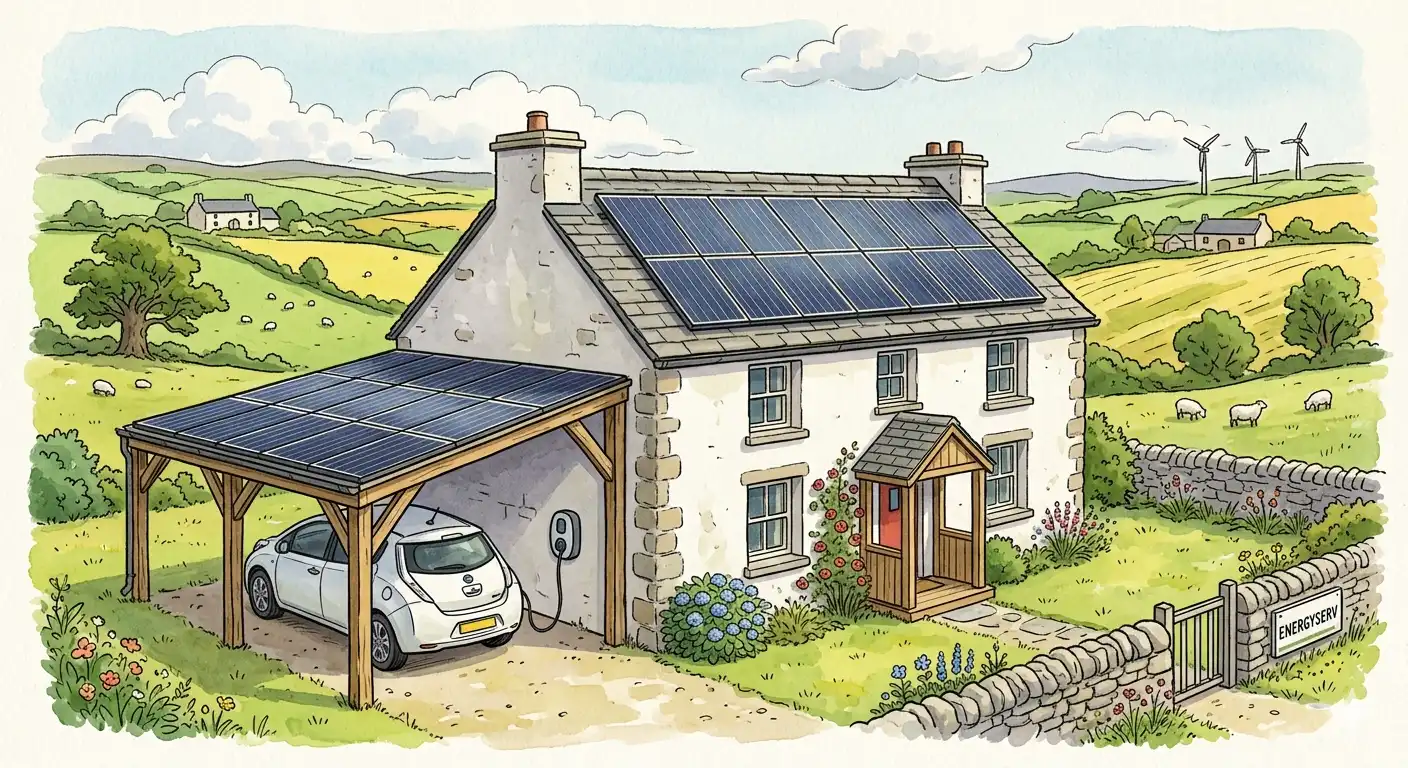
Solar panels and electric vehicles (EVs) are central to Ireland’s clean-energy shift—and the EV Charger Home Grant helps make charging at home simpler and cheaper. Administered by the Sustainable Energy Authority of Ireland (SEAI), the scheme offers up to €300 toward the purchase and professional installation of a home charge point for battery electric vehicles (BEVs) and plug-in hybrid electric vehicles (PHEVs). The goal: speed up EV adoption, cut greenhouse-gas emissions, and make daily charging convenient and safe.
How the EV Charger Grant Works
- Grant value: Up to €300 toward a compliant home charger and its installation.
- Who runs it: SEAI, as part of Ireland’s broader climate and transport strategy (also supported by ZEVI and other government bodies).
- Why it matters: Home charging removes friction—charge overnight, avoid queues, and reduce reliance on public infrastructure.
Eligibility Criteria (At a Glance)
To qualify, applicants must meet SEAI’s core conditions:
- EV ownership: You must own or be purchasing an eligible BEV or PHEV (new or second-hand).
- Registration: The vehicle must be registered in your name with a valid Irish registration plate.
- Property setup: You need off-street parking and a suitable location for the charger.
- Approved equipment: The charger must meet SEAI technical standards (check SEAI’s Smart Charger Register).
- No duplicate claim: You cannot have already received a charger grant for the same vehicle.
These rules ensure public funds are used effectively and that every installation meets modern safety and performance thresholds.
Timing: When to Apply and When You’re Paid
The scheme is open year-round, subject to funding availability. After you submit a completed payment request with the required documentation, SEAI typically processes payment in about 4–6 weeks. To avoid delays, submit your request promptly after installation once all documents are ready.
What Installation Involves (Safety First)
Installations must be carried out by a Safe Electric Ireland–registered electrician. Expect your installer to:
- Assess your electrical system (capacity, fuse board, and any upgrades required).
- Position the charger safely and conveniently, and connect it to a suitable power supply.
- Provide a test record sheet and certificate of completion confirming compliance.
Because EV charging adds a significant electrical load, your installer will review total household demand (think high-draw appliances like electric showers) and confirm your electricity network can handle the charger. Professional installation isn’t just best practice—it’s a grant requirement.
Choosing a Home Charger (Equipment Essentials)
Modern smart chargers can schedule charging for cheaper night rates, track usage, and coordinate with home energy systems. To receive funding:
- Pick a model on SEAI’s Smart Charger Register.
- Ensure compatibility with your EV and your home’s wiring.
- Consider extras like load balancing and app control to optimise running costs.
Costs Covered and Minimum Spend
The grant helps cover the charger hardware and professional installation. SEAI requires a minimum total spend (typically €600) across product + install to qualify. Keep itemised invoices and receipts—you’ll need them for your payment request.
How to Apply (Step by Step)
- Confirm eligibility: Vehicle, property, and charger requirements.
- Select equipment & installer: Choose a charger on SEAI’s register and a Safe Electric–registered electrician.
- Prepare documents: Proof of EV ownership/purchase, vehicle registration details, MPRN, itemised invoices, bank details.
- Submit payment request: File through the SEAI portal with all supporting documentation.
- Verification & payment: SEAI checks eligibility and issues up to €300 by electronic funds transfer (EFT).
Benefits You’ll Notice Right Away
- Lower upfront cost: The grant softens the price of buying and installing a home charger.
- Daily convenience: Plug in at home, wake up to a full battery—no queueing, no detours.
- Sustainability gains: More EVs on the road mean fewer tailpipe emissions and progress toward climate targets.
- Flexibility: Applies to new and second-hand EVs, opening access to more drivers.
How It Fits with Other Supports
The charger grant sits alongside broader incentives: lower VRT and motor tax for EVs, and SEAI home-energy supports such as insulation, heat pumps, and solar panels. Together, these measures make clean transport and efficient homes more attainable—supporting the government’s goal of a much larger share of zero-emission vehicles by 2030.
Quick Tips to Avoid Delays
- We ensure all equipment is grid-compliant.
- Use approved pros and products (Safe Electric installer, SEAI-listed smart charger).
- Check your paperwork twice (MPRN, bank details, receipts).
- Apply promptly after installation—funding is subject to availability.
- Confirm capacity: Ask your electrician about load management if you have high-draw appliances.
Final Thoughts
The EV Charger Grant Ireland is a practical, no-nonsense way to make home charging affordable, safe, and hassle-free. With up to €300 toward a compliant charger and professional installation—plus streamlined processing once documents are in order—most households can get set up quickly. When paired with other SEAI programmes for home energy upgrades, from insulation to solar panels, the charger grant helps households save money, cut emissions, and move confidently toward a cleaner transport future.