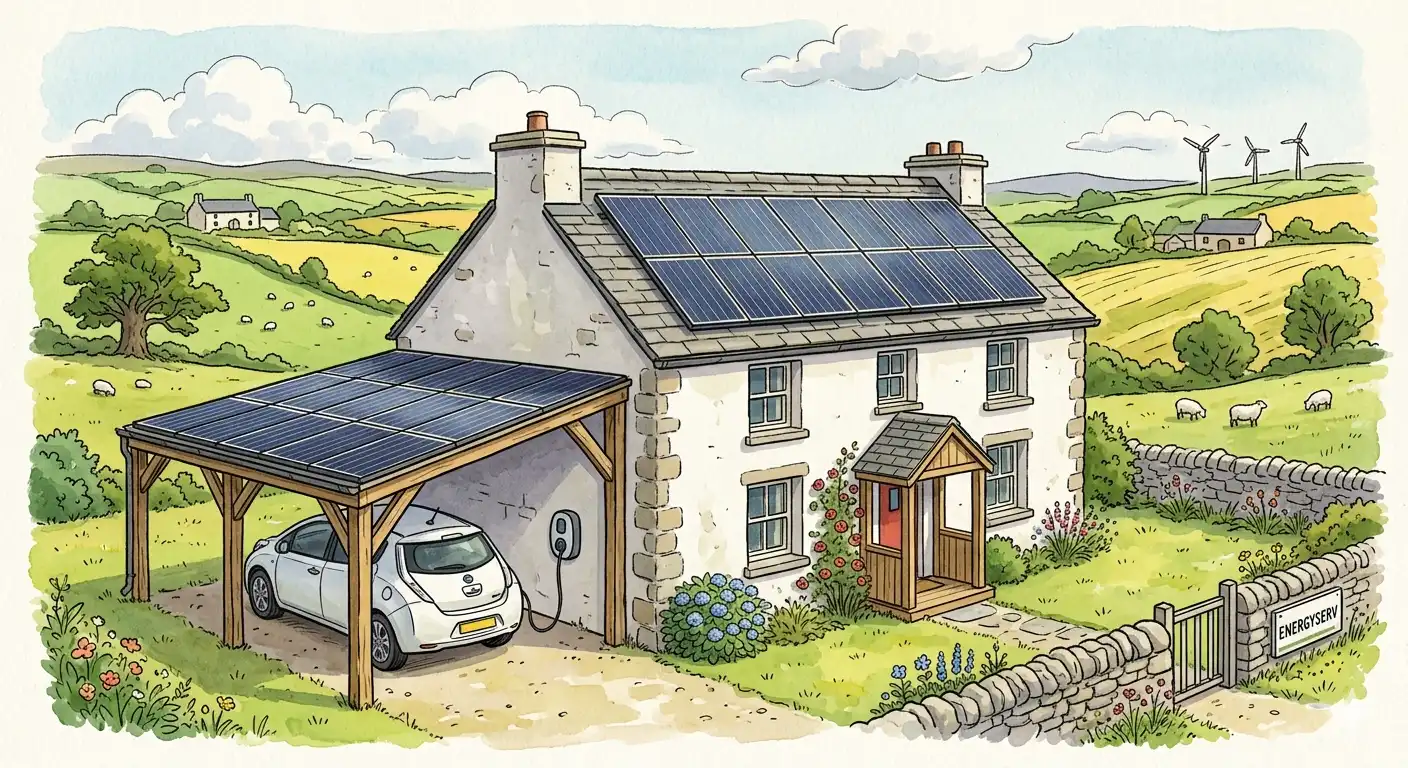
If you’re buying, selling, or living in Ireland, your BER (Building Energy Rating) is more than just a colorful sticker used for bragging rights. It’s a direct reflection of how much you’ll spend on bills and how warm your toes will stay in the winter. So what is a good BER rating? Read on to find out.
At EnergyServ, we believe the best BER rating isn’t just a letter—it’s the thing that saves you the most money with the least amount of hassle.
 The BER Scale: A Simple Breakdown
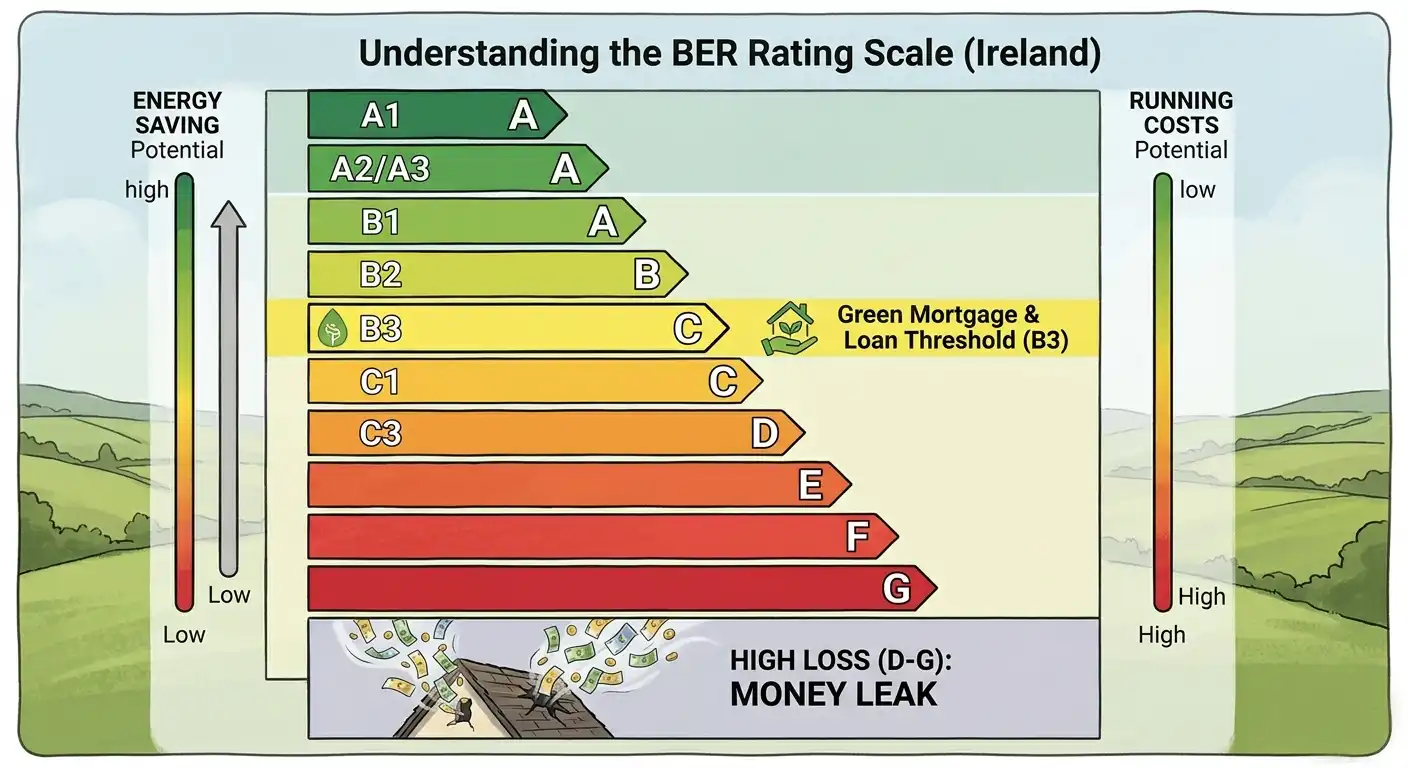
Think of your BER as a “fuel efficiency” grade for your house. The closer your rating is to an A BER rating, the lower your energy bills will be. Here’s a basic breakdown.
-
The “A-Rated” Dream: These are mostly new builds. They are so airtight that they require very little heating. They are the gold standard for comfort.
-
The “B3” Sweet Spot: This is the most important target for existing homeowners. Reaching a B3 often unlocks “Green Mortgages” from major Irish banks, which means a lower interest rate and more money in your pocket every month.
-
The “Average” C: Most older Irish homes sit here. It’s fine, but you’re likely losing heat through the roof and paying more than you need to for electricity.
-
The “D to G” Danger Zone: These homes are “leaky.” They cost the most to heat and often feel drafty, making them the best candidates for government upgrades.
The “Solar PV” Shortcut
One of the fastest ways to climb the BER ladder without tearing down walls is installing Solar PV.
At EnergyServ, we see homeowners jump one or even two full letter grades just by adding panels. Because you are generating your own clean power, the BER system views your home as much less reliant on expensive, carbon-heavy energy. It’s the “low-stress” way to hit that B3 mortgage threshold.
Why a Good Rating Matters Now
A better BER isn’t just about being “green”—it’s about your financial health:
-
Cheaper Mortgages: Lower interest rates for B3+ homes can save you thousands over the life of your loan.
-
Higher Resale Value: Buyers are actively looking for A and B-rated homes to avoid future renovation costs, making your property much easier to sell.
-
Government Support: There are still significant SEAI grants available to help cover the cost of solar installations and insulation. We handle the paperwork, so you don’t have to.
4 Easy Steps to Boost Your Grade
You don’t need a “Deep Retrofit” to see a difference. Start here:
-
Step 1: Insolate your attic. It’s the cheapest way to stop heat from escaping through the roof.
-
Step 2: Add Solar PV. Slash your energy score and start producing your own electricity.
-
Step 3: Switch to LEDs. It’s a small change, but it counts toward your official assessment.
-
Step 4: Smart Controls. Use a modern thermostat so you aren’t heating empty rooms.
Conclusion: Future-Proof Your Home A “good” BER rating is about making your home warmer and your bank account fuller. Whether you want that mortgage discount or just a cozier living room, EnergyServ is here to make the process simple.
Ready to see how Solar can boost your rating? Contact the EnergyServ team today for a free consultation.
Frequently Asked Questions Concerning BER Ratings
How long does a BER certificate last? A BER certificate is valid for 10 years, provided there are no significant changes to the home that would alter its energy performance (like an extension, new windows, or a change in heating system). If you make major upgrades, such as installing solar panels, it is highly recommended to get a new assessment to officially “unlock” your improved rating and potential mortgage discounts.
Can solar panels really move my home from a C to a B3? Yes, in many cases, but not always! Because solar panels reduce your “Primary Energy” use—the main metric used by assessors—they are one of the most effective ways to jump grades. While every house is different, a standard solar PV system is often the final piece of the puzzle that nudges a high ‘C’ rated home into the ‘B3’ bracket.
Do I need to do a “Deep Retrofit” to see a difference in my bills? Not necessarily. While a deep retrofit (insulation, windows, and heat pump) is the most thorough approach, many homeowners see immediate results from a “Step-by-Step” approach. Starting with attic insulation and Solar PV provides the fastest return on investment and noticeably reduces monthly outgoings without the upheaval of a full renovation.
Will solar panels work in the Irish climate? Absolutely. Solar PV panels don’t need direct, scorching sunlight to work; they operate on daylight. Even on typical overcast Irish days, your system will generate electricity. Modern panels are designed to be highly efficient in northern European climates, making them a reliable energy source year-round.
How do I claim the SEAI grant for my upgrades? The process is straightforward: you must apply for and receive a grant offer before any work begins. At EnergyServ, we guide you through the application process and ensure all the technical paperwork meets SEAI standards, so your grant is paid out smoothly once the installation is complete and the post-install BER is published.