If you’re considering installing solar panels in Ireland, one of the most important questions you’ll ask is: how many panels do I actually need? Whether you’re a homeowner hoping to cut electricity bills or a farmer aiming to power your operations more sustainably, system sizing is key to maximising your return on investment.
The number of solar panels required depends on several factors—from your average energy usage to the roof space available and whether you plan to add battery storage or sell excess electricity back to the grid. In this guide, we break down the key considerations to help you estimate what’s right for your home or farm in Ireland.
How Solar Panel Systems Are Sized
Solar PV systems are typically sized in kilowatts (kWp), which measures how much electricity the system can produce in full sun. A standard solar panel generates between 350 and 420 watts, meaning:
- A 1 kW system needs about 3 panels
- A 4 kW system (common for homes) = 10–12 panels
- A 10 kW system (common for farms) = 24–28 panels
Key Factors That Determine How Many Solar Panels You Need
1. Your Annual Electricity Usage
Start by looking at your electricity bills to find your annual consumption in kilowatt-hours (kWh). The average Irish household uses around 4,200 kWh/year, while larger rural homes or small farms may use 6,000–10,000+ kWh/year.
| Usage Level | Annual kWh | Suggested System Size |
|---|---|---|
| Low (1–2 people) | 2,500–3,500 | 2.5–3.5 kWp (6–9 panels) |
| Average household | 3,500–5,000 | 4–5 kWp (10–13 panels) |
| Large home/farm | 6,000–10,000+ | 6–10+ kWp (15–28 panels) |
Want to calculate it precisely? Divide your annual kWh usage by 850 (the average number of kWh produced per 1 kWp in Ireland) to get your ideal system size.
2. Available Roof or Ground Space
Each panel is about 1.7 m², so roof or land space is a big consideration. You’ll need:
- 15–20 m² for a 3–4 kW residential system
- 35–50 m² or more for larger 8–10 kW farm setups
If your roof isn’t ideal (e.g. shaded, small, or facing east/west), ground-mounted panels may be a better option for rural homes and farms.
3. Daylight Consumption vs Exporting to the Grid
If you consume most of your electricity during the day (e.g. working from home or running milking equipment), you’ll benefit more from direct solar usage. If not, you may need:
- Battery storage to save unused power
- Or to sell excess electricity to the grid via the Micro-generation Support Scheme
This affects whether it makes sense to install more panels than you immediately need.
4. System Efficiency and Panel Type
Higher-efficiency monocrystalline panels produce more power per square metre—ideal for Irish rooftops with limited space. EnergyServ installs only monocrystalline panels due to their superior low-light performance, which is critical in Ireland’s cloudy climate.
If you’re comparing systems, keep in mind that:
- A 4 kWp system with high-efficiency panels could use 10 panels
- A 4 kWp system with budget panels might require 12 or more
How Grants Can Influence the Number of Solar Panels You Install
In Ireland, government support schemes like SEAI’s Solar Electricity Grant and TAMS III for farmers not only reduce the cost of solar installations—they can also influence the size of the system you choose.
SEAI Grants for Homeowners
For residential properties, the SEAI grant provides up to €1,800 toward solar panel installations. The grant is based on your system size, with:
- €700 per kWp for the first 2 kWp
- €200 per additional kWp up to 4 kWp
- Maximum grant value: €1,800
This means that systems between 2 and 4 kWp are the most cost-efficient when it comes to grant funding. If your home uses around 3,500–4,000 kWh per year, a 4 kWp system will often hit the sweet spot for energy savings and grant value.
TAMS Grants for Farmers
Farmers installing solar panels can benefit from the Targeted Agricultural Modernisation Scheme (TAMS III), which offers grant aid of up to 60% of the eligible system cost. This makes it more affordable to size larger systems for agricultural needs, such as:
- Milking parlours
- Grain dryers
- Refrigeration systems
- Water pumps and lighting
Because TAMS grants are tied to reference cost calculations set by the Department of Agriculture, it’s essential to size your system strategically to meet both your energy needs and maximise grant support. EnergyServ designs every TAMS-eligible system in line with these reference values.
Why It Matters
In both cases, the amount of financial support you receive may affect whether you choose to:
- Stay within a particular system size to qualify for maximum grant coverage
- Go slightly larger to prepare for future energy demands
- Include smart add-ons like batteries or EV chargers that complement your solar output
Grant funding not only reduces your out-of-pocket cost—it helps you invest in a system that will serve your needs for decades. EnergyServ’s team is experienced in both SEAI and TAMS applications, ensuring that your system design is optimised for performance and grant eligibility.
How Many Solar Panels Does a House Need in Ireland?
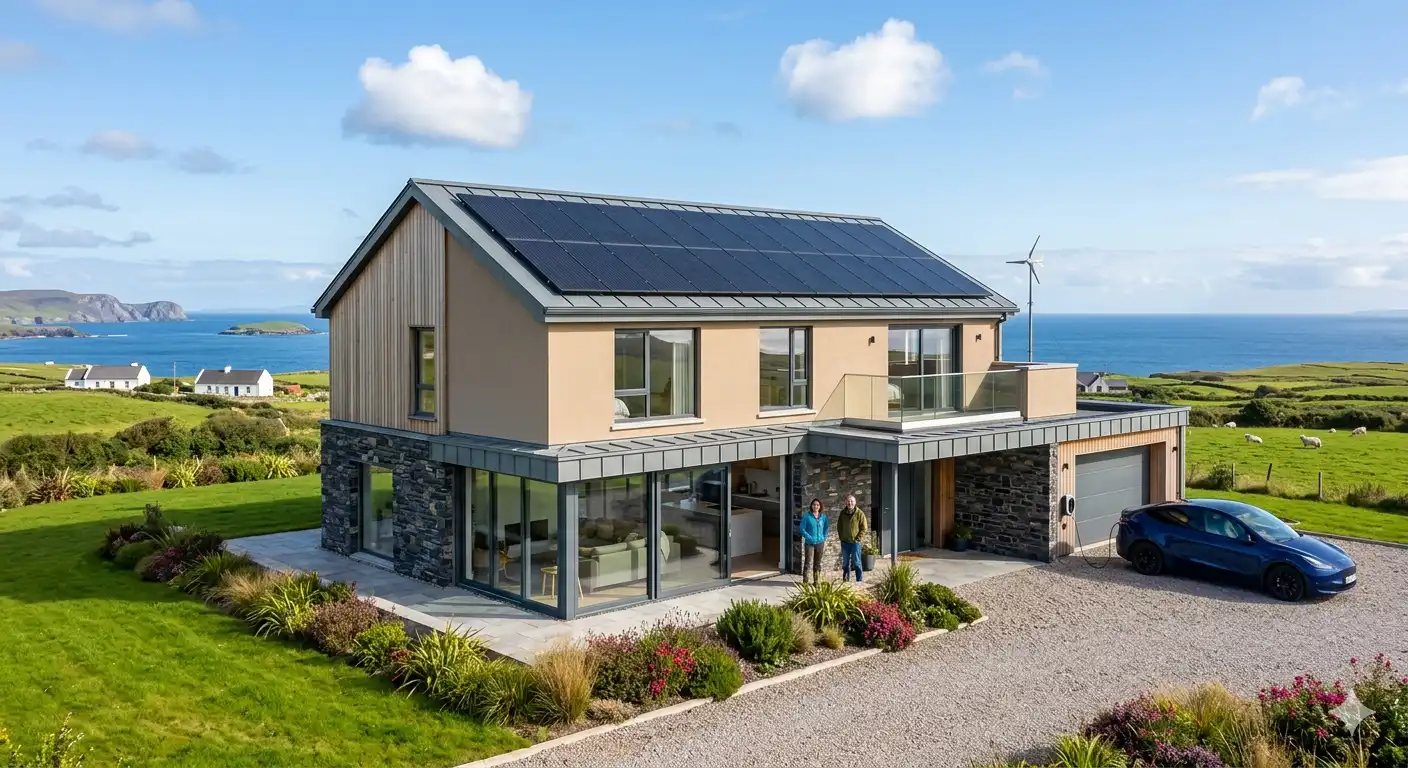
Most standard 3–4 bedroom Irish homes benefit from a 4–6 kWp solar system, depending on:
- Household size
- Appliance usage (e.g. immersion heater, dryer, EV)
- Roof orientation (south-facing is ideal)
- Whether battery storage is included
A 4 kWp system typically meets 70–90% of a home’s annual electricity needs, especially if used smartly with a diverter or energy monitor.
How Many Solar Panels Do Farmers Need?
Farms often require more power—especially if you’re running refrigeration, milking parlours, irrigation systems, or electric fences.
A typical dairy farm might need:
- 8–12 kWp system for partial offset
- 15+ kWp system for full daytime usage coverage
Larger systems also allow you to:
- Reduce reliance on grid electricity
- Power sheds, workshops, and EV chargers
- Export surplus to the grid for extra revenue
EnergyServ can size your system using TAMS grant reference pricing, helping you qualify for up to 60% funding on solar projects through the TAMS III scheme.
How to Estimate the Right System Size for Your Property
Use this formula as a rough guide:
Annual electricity use (kWh) ÷ 850 = Ideal kWp size
Example:
If your home uses 4,000 kWh/year → 4,000 ÷ 850 = ~4.7 kWp system → approx. 12 panels
Then multiply by average panel size (1.7 m²) to check if your roof can accommodate it.
Of course, the best way to get an accurate number is to arrange a site assessment with experts.
Should You Oversize Your Solar System?
In some cases, oversizing your system slightly can future-proof your setup:
- Planning to install a heat pump or EV charger soon? Add capacity now.
- Want to maximise your TAMS or SEAI grant? Install as much as you’re eligible for.
- Hoping to sell electricity back to the grid? A bigger system increases export potential.
But oversizing for the sake of it isn’t always cost-effective. EnergyServ will design a system tailored to your needs, ensuring your investment pays off faster.
Get Expert Guidance on Your Ideal Solar Setup
Whether you’re a homeowner trying to cut bills or a farmer applying for grant funding, EnergyServ can help you find the right number of panels for your situation.
We offer:
- Free property assessments
- Accurate energy usage analysis
- Grant application support (SEAI and TAMS)
- High-efficiency solar panel installation
- Battery and EV charger integration
Start your solar journey today with a system designed for real Irish conditions.