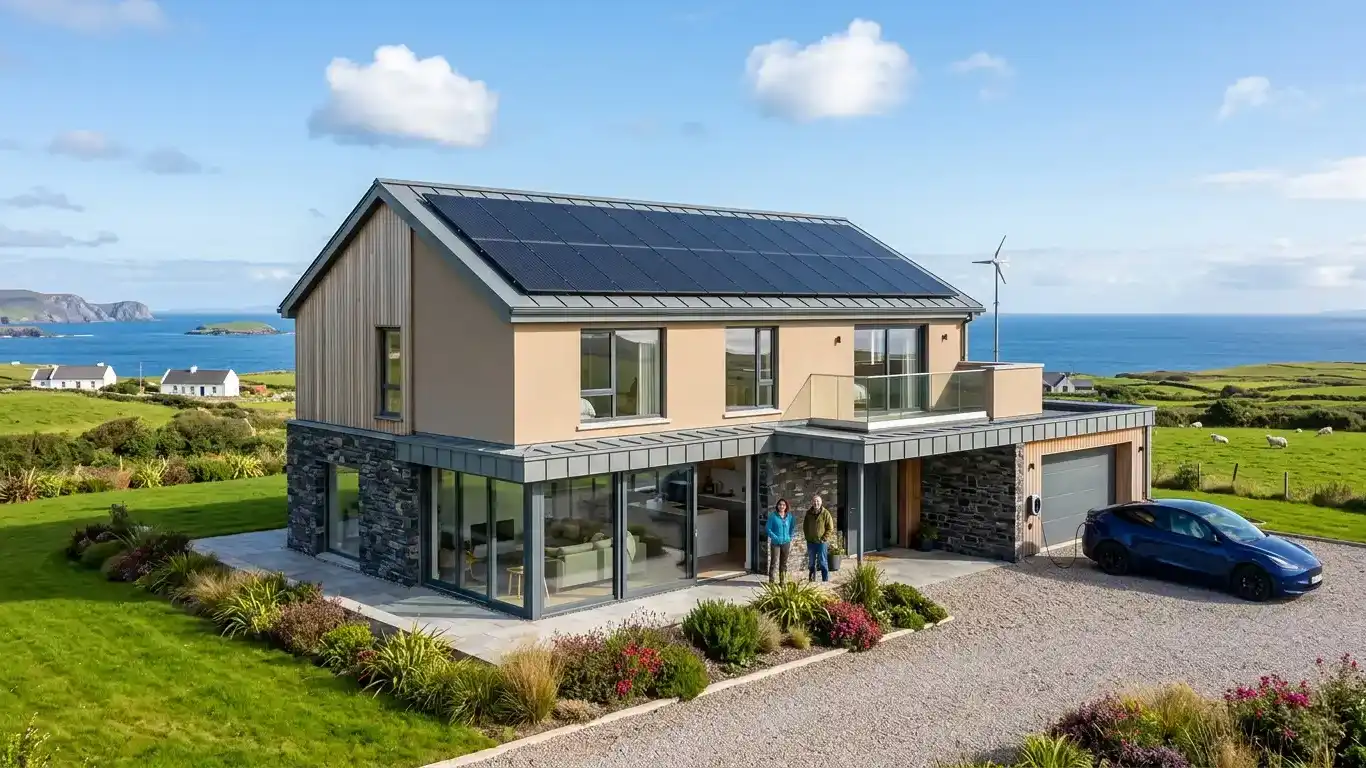
Experience the ease of charging your electric vehicle right from your driveway. Switching to electric isn’t just a smart financial move in the current Irish market—it’s a significant step toward a more sustainable future.
We offer expert guidance on home energy management to ensure your domestic supply handles your EV and your household appliances simultaneously. From selecting the right hardware for your specific car to navigating the best installation practices, we’re here to help you make the switch.
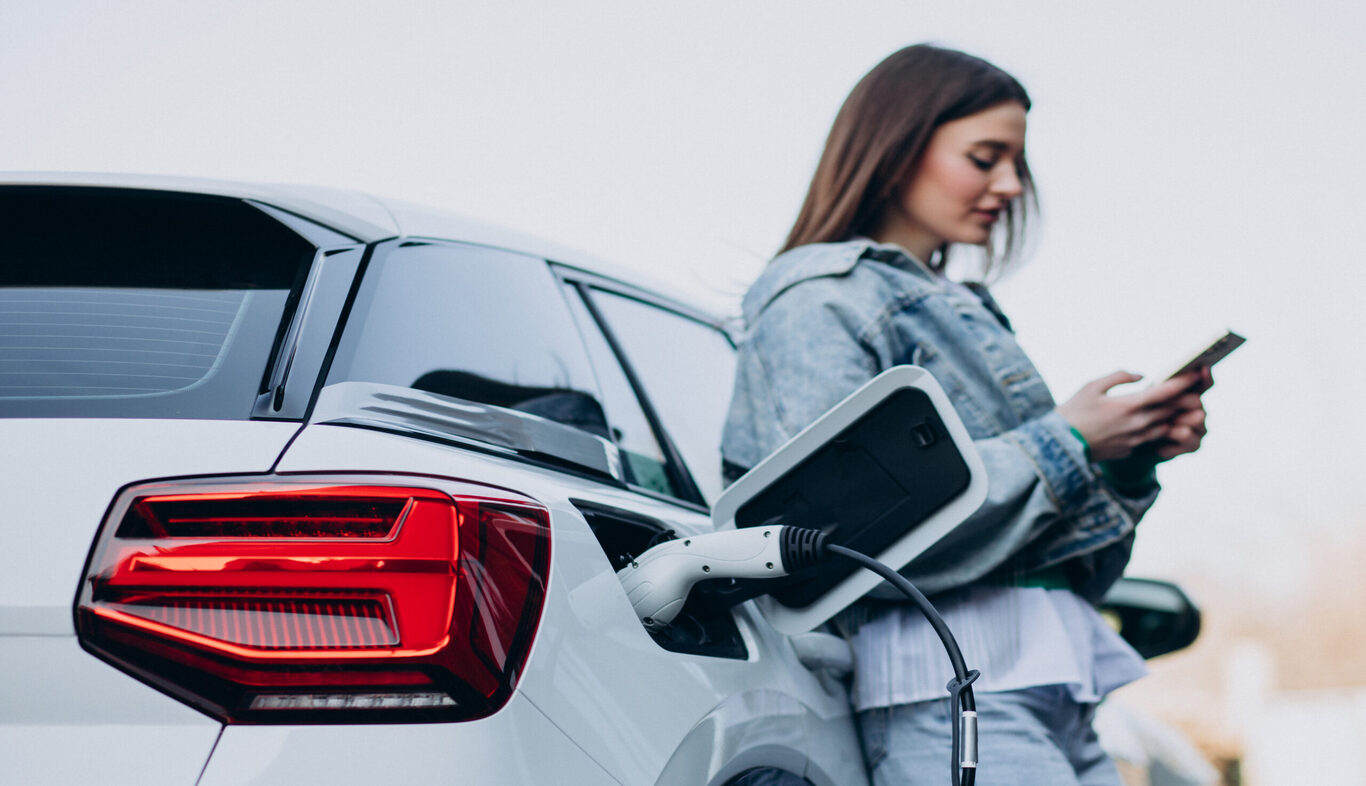
The Sustainable Energy Authority of Ireland (SEAI) currently offers a grant of €300 toward the purchase and installation of a smart home charger. This support is available to homeowners for both new and second-hand EVs, helping to offset the initial setup costs.
Modern electric vehicles are engineered to meet the highest safety standards, consistently matching or exceeding the safety ratings of traditional petrol and diesel cars.
Beyond the charger grant, Ireland offers substantial VRT relief for electric vehicles with an OMSP of up to €40,000. Additionally, EVs enjoy the lowest rate of motor tax per year.
The days of limited choice are over. Today’s market features everything from compact city cars like the Citroën ë-C3 to family-sized SUVs like the Kia EV3 and BMW iX3, offering spacious boots and comfortable seating for five.
While earlier models offered limited mileage, most new EVs in 2026 boast ranges between 300 km and 600 km on a single charge. Given that the vast majority of Irish commuters drive less than 100 km daily, a modern EV can easily handle several days of driving without needing a top-up.
Charging at home is simple and convenient for most EV drivers. While a standard 3-pin socket can be used occasionally, a dedicated home charging point is the recommended option for everyday use. A typical 7kW home charger allows many EV owners to charge overnight while they sleep, making it easier to keep their vehicle topped up and reducing reliance on public charging.
Charging at home can be significantly more cost-effective than petrol or diesel. By using a night-rate or EV-specific smart tariff, many drivers can reduce their charging costs substantially, especially when charging overnight. Depending on your electricity plan, battery size and mileage, home charging can offer meaningful annual fuel savings compared with running a petrol or diesel car.
Thinking about installing a home EV charger? You’ve come to the right place. Below, we have answered the most frequent questions Irish homeowners ask—from choosing between tethered and untethered units and maximising your SEAI grant to understanding charging speeds and smart home integration. If you need a more personalised recommendation for your vehicle, our expert team is ready to assist.
As of 2026, the SEAI offers a grant of €300 toward the purchase and installation of a smart home charger. To qualify, you must use a Safe Electric Registered Electrical Contractor and install a unit from the SEAI’s approved smart charger register. The grant is now available to homeowners even if they don’t yet own an EV, making it easier to future-proof your home.
Tethered: The charging cable is permanently attached to the wall box. It’s convenient because you don’t have to get your cable out of the boot every time you park.
Untethered (Socketed): There is no permanent cable; you plug your own cable into a socket on the unit. This is more flexible if you have guests with different types of EVs or if you prefer a cleaner look on your driveway when not charging.
Most Irish home installations use a 7kW “Fast” charger. For a typical family EV with a 60kWh battery, a charge from 10% to 100% takes approximately 8 hours. This makes overnight charging the most practical solution, ensuring your car is “full” every morning.
While not strictly required to operate a charger, a Smart Meter is essential to access “EV-specific” or “Night Boost” tariffs. In 2026, many Irish providers offer ultra-low rates (often between 2am and 5am) that can reduce your charging costs to as little as 7c to 9c per kWh, significantly lower than standard day rates.
Yes! If you have solar panels, you can install a “Solar Aware” smart charger. These units communicate with your solar inverter to divert excess green energy directly into your car battery rather than sending it back to the grid. This effectively allows you to drive on 100% free, self-generated sunshine.
While possible using a “Granny Cable,” it is not recommended for daily use. A standard Irish socket is not designed for the sustained high-power draw required by an EV, which can lead to overheating. Additionally, charging via a 3-pin plug is very slow (approx. 2.3kW), taking over 24 hours for a full charge. A dedicated home wallbox is safer, faster, and more efficient.