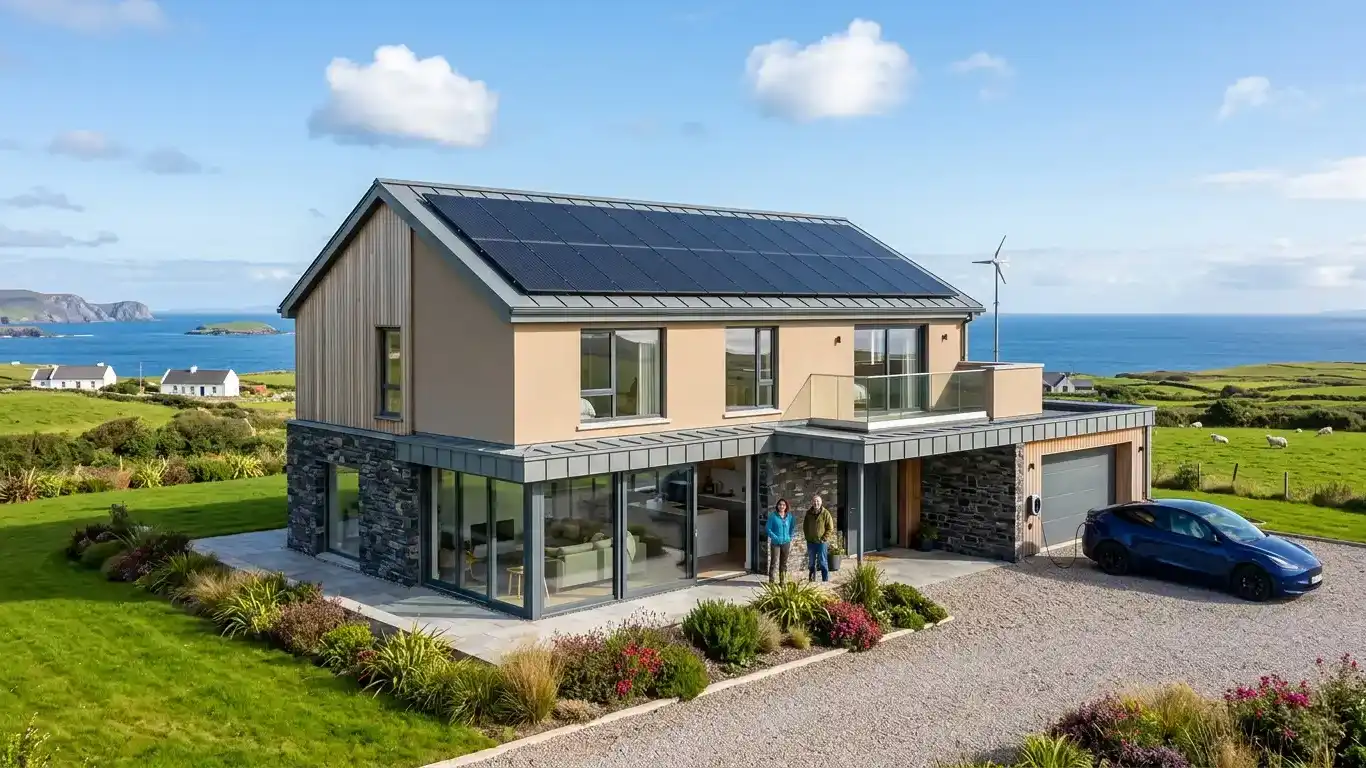
As more Irish drivers switch to electric vehicles, one of the most common questions we hear is whether it’s possible to have a fast EV charger at home. The short answer is yes — but the right setup depends on your home’s electrical supply, charging habits, and energy goals.
Installing a home EV charging station gives you convenient, affordable charging every day, and with the right equipment, you can enjoy faster charging times similar to what you’d find at many public stations.
What Counts as a “Fast” EV Charger?
EV chargers are generally grouped by charging speed, which depends on the power output measured in kilowatts (kW):
| Charger Type | Output | Typical Location | Average Charging Time* |
| Slow | 2–3.6 kW | Standard plug socket | 12–24 hours |
| Fast | 7.4 kW (single-phase) | Home use | 6–8 hours |
| Rapid | 22 kW (three-phase AC) or 50+ kW (DC) | Public stations | 30–90 minutes |
*Based on a typical 60 kWh EV battery.
Most Irish homes run on single-phase electricity, which supports up to 7.4 kW — fast enough to fully charge most EVs overnight. This is considered a “fast home charger” and is the most common option for residential installations.
Installing a Fast Home EV Charger
The majority of Irish homeowners can install a fast 7.4 kW home EV charging station without needing any major electrical upgrades. Here’s how it works:
- Site assessment: A certified electrician evaluates your home’s electrical system and determines the safest connection point to your fuse board.
- Installation: The charger is mounted on a wall, typically near your driveway or garage.
- Testing and setup: The installer ensures the system is properly earthed, protected, and ready for regular use.
Once set up, you can charge most EVs from 20% to 80% in about 5–6 hours, making overnight charging perfectly practical.
Can You Install an Even Faster Charger?
If you’re interested in going beyond 7.4 kW, it’s possible — but it depends on your property’s electrical phase supply.
1. Three-Phase Supply
Homes with three-phase electricity can support 22 kW AC chargers, reducing charging time to around 2–3 hours for many vehicles. However, most residential properties in Ireland are single-phase, meaning you’d need to upgrade your connection with your energy provider — a process that can be expensive and not always available in every area.
2. DC Rapid Chargers
Ultra-fast DC chargers (25–50+ kW) are generally reserved for commercial or public charging sites due to their high power demand and cost. Installing one at home is possible in theory but requires substantial infrastructure upgrades, including a dedicated power supply, cooling systems, and professional maintenance.
For most homeowners, the 7.4 kW charger remains the sweet spot between speed, cost, and practicality.
The Role of Smart Chargers in Faster Charging
Even without upgrading your supply, a smart charger can make your setup feel faster and more efficient by optimising how and when energy is used.
These chargers allow you to:
- Schedule charging during low-demand hours for cheaper rates.
- Automatically balance load between your EV and home appliances to prevent tripping.
- Pair with solar panels or batteries to use renewable energy first before drawing from the grid.
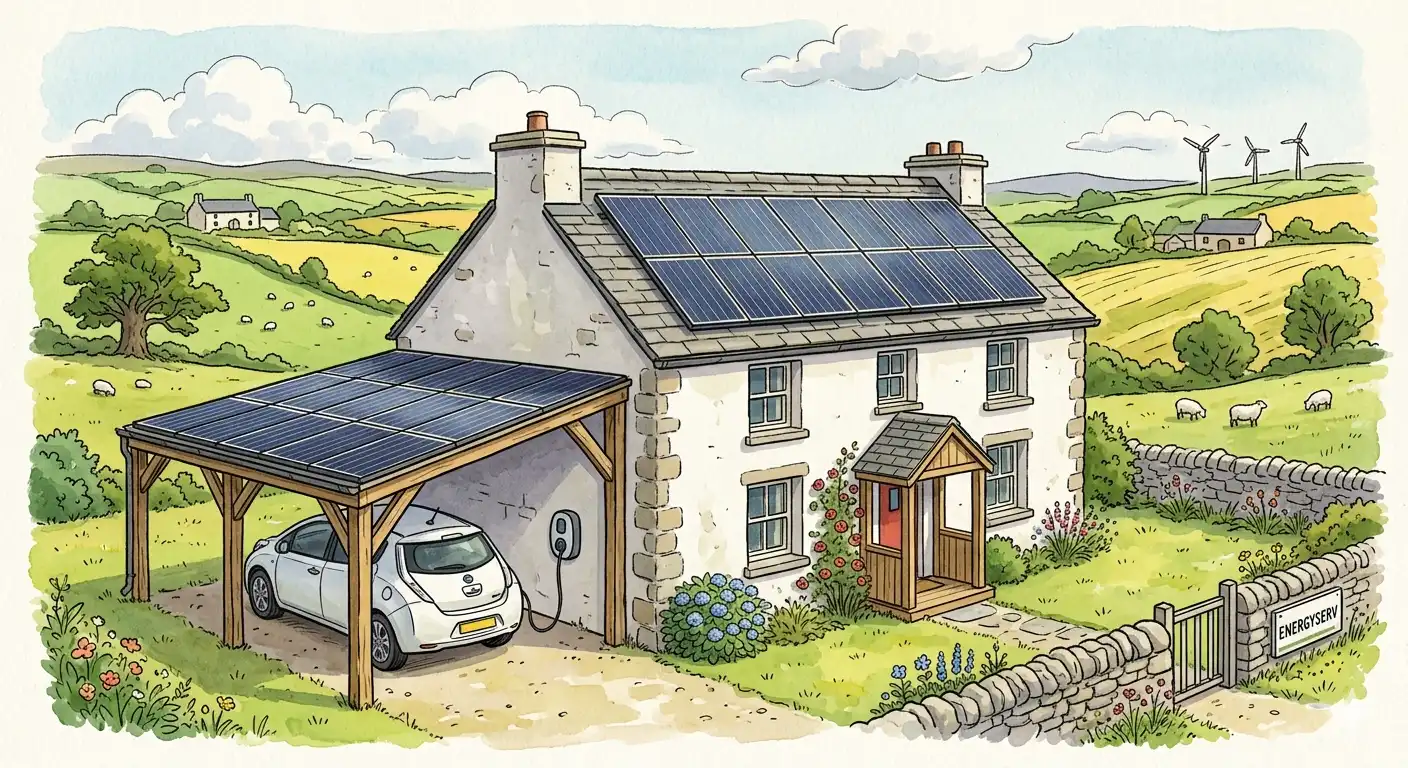
For example, when integrated with EnergyServ’s solar carports, your home EV charging station can use stored solar power to top up your car even faster during the day — all without increasing your electricity bill.
How Solar Power Enhances Charging Speed
Solar panels don’t directly make your charger faster in terms of kW output, but they make charging more efficient and cost-effective. By using free renewable energy when the sun is shining, you can offset grid costs entirely.
If you add a battery storage system, excess solar energy collected during the day can be stored and used later — letting you charge your EV in the evening without waiting for off-peak hours. This combination of solar + storage + smart control can reduce total charging time and cost dramatically.
SEAI Grant for Fast Home Chargers
The Sustainable Energy Authority of Ireland (SEAI) offers a €300 grant toward the installation of a home EV charger. This applies to fast (7.4 kW) models installed by registered electricians.
This grant makes upgrading to a smart, fast charger more affordable, especially if you’re investing in a future-proof system compatible with solar or smart energy management.
Factors That Influence Charging Speed
Even with a fast charger, actual charging times can vary based on:
- Your car’s onboard charger capacity — Some EVs limit input to 7 kW or less.
- Current battery level — The last 20% of a charge typically takes longer.
- Temperature conditions — Cold weather can slightly reduce charging efficiency.
- Charger cable rating — Using the manufacturer’s recommended cable ensures optimal performance.
Your installer can assess these details to ensure your system delivers the fastest safe charge possible.
Fast vs Rapid Charging: Which Is Right for You?
| Feature | Fast Home Charger (7.4 kW) | Rapid Public Charger (50 kW+) |
| Cost | €800–€1,500 installed | €20,000+ (commercial scale) |
| Power Supply | Single-phase | Three-phase or DC |
| Charging Time | 6–8 hours | 30–60 minutes |
| Ideal Use | Overnight charging | Long-distance travel |
| Running Cost | Off-peak rates, solar integration | Pay-per-use, higher rates |
For most Irish homeowners, the fast 7.4 kW option delivers the best balance of speed, affordability, and long-term convenience.
The Bottom Line
Yes — you can absolutely have a fast EV charger at home. A 7.4 kW home EV charging station offers reliable overnight charging, low running costs, and complete control over your energy use. And with smart or solar integration, you can go one step further — turning your driveway into a sustainable charging hub for years to come.
Fast charging, built for your home.
EnergyServ’s certified installers make it easy to add a fast home EV charging station to your property — helping you charge smarter, drive greener, and save more.